
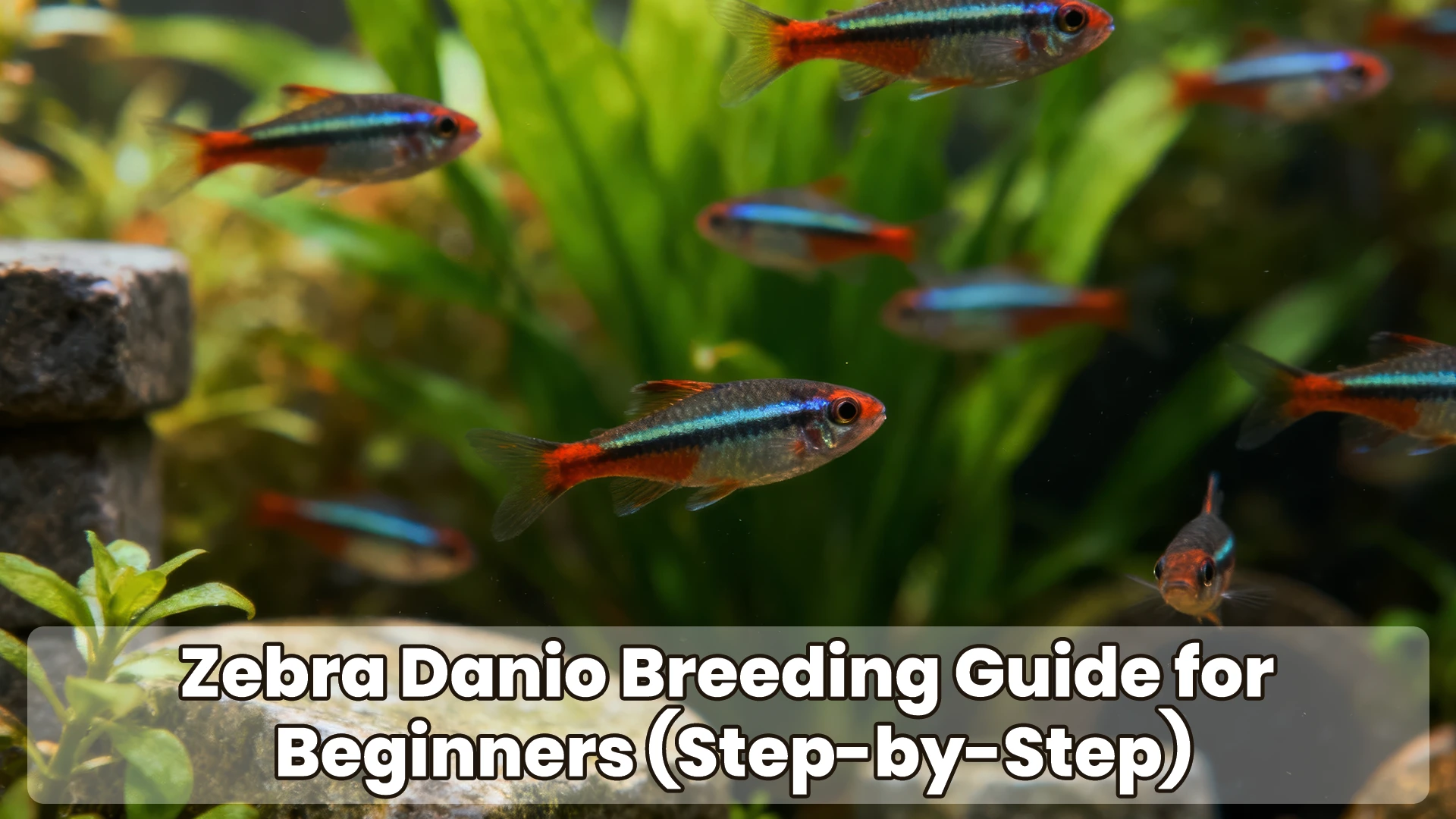
I still remember the morning I spotted tiny zebra danio fry darting around my tank for the very first time. It was a Tuesday — early, maybe 6 a.m. — and I hadn’t even made my coffee yet. I walked over to check the water temperature out of habit, and there they were. These impossibly small, almost transparent little creatures zipping between the marbles at the bottom of the tank.
I literally said “oh my god” out loud, to no one.
But here’s the honest truth: the weeks before that moment were anything but magical. I had no idea what I was doing. I’d read bits and pieces online, set up a tank based on guesswork, watched my danios do absolutely nothing for days, and — at one point — genuinely considered giving up on breeding fish altogether.
If that sounds familiar, I want you to know: you’re not doing it wrong. You just need a clear, practical starting point.
This zebra danio breeding guide walks you through every step — from setting up the right tank, to triggering spawning, to keeping those tiny fry alive long enough to actually enjoy them. No fluff, no jargon walls. Just what actually works.
Let’s start with why zebra danios are — honestly — the best fish a beginner breeder could pick.
Why Zebra Danios Are Perfect for Beginner Breeders
I’ve been keeping and breeding fish for over seven years now. I’ve worked with guppies, bettas, corydoras, even had a brief and humbling encounter with discus (don’t ask). But if someone tells me they want to try fish breeding for the first time, I always say the same thing: start with zebra danios.
Not because they’re boring. Because they’re forgiving.
They’re Hardy, Social, and Forgiving
Zebra danios (Danio rerio) are one of the most resilient freshwater fish you can keep. They tolerate a wider range of water conditions than most species, they don’t need a perfectly dialed-in setup to thrive, and they’re genuinely active and fun to watch while you’re figuring things out.
Here’s what makes them stand out for beginners:
- Temperature flexibility — they’re comfortable anywhere between 64°F and 77°F (18°C–25°C), though the sweet spot for breeding is 72°F–78°F (22°C–26°C)
- Community-friendly — they school naturally and don’t stress easily in small setups
- Fast spawners — a conditioned pair can spawn within 24 hours of being introduced to a breeding tank
- High egg count — a single female can release anywhere from 100 to 300 eggs per spawn, which gives you a real buffer even if some don’t make it
- No parental care needed — which actually makes things simpler, not harder (more on why in a minute)
Low Cost, High Reward
Setting up a dedicated zebra danio breeding tank won’t drain your wallet. A basic 10-gallon tank, a simple sponge filter, a small heater, and a handful of marbles or a fine mesh spawning net — that’s genuinely all you need to get started. My first successful breeding setup cost me under $40 total, including the fish.
Quick Breeding Cycle
Within a week of my first proper attempt — once I actually knew what I was doing — I had fry. That’s not typical for most fish species. It’s one of the reasons danios are used so heavily in scientific research: their breeding cycle is fast, reliable, and repeatable.
Now that you know why danios are such a great choice, let’s talk about setting up the right space for them.
Setting Up Your Zebra Danio Breeding Tank
Here’s where most beginners — including past me — make their first mistake. They try to breed danios in their main community tank. I get it. It seems easier. But it almost never works, because the eggs get eaten almost immediately.
A separate breeding tank is non-negotiable. The good news? It doesn’t have to be complicated.
Tank Size and Equipment You’ll Need
A 10-gallon tank is the sweet spot for zebra danio breeding. It’s big enough to give the fish room to spawn actively, small enough to keep water conditions stable without a lot of effort.
Here’s what I keep in my breeding setup:
- 10-gallon glass tank (bare bottom — easier to clean)
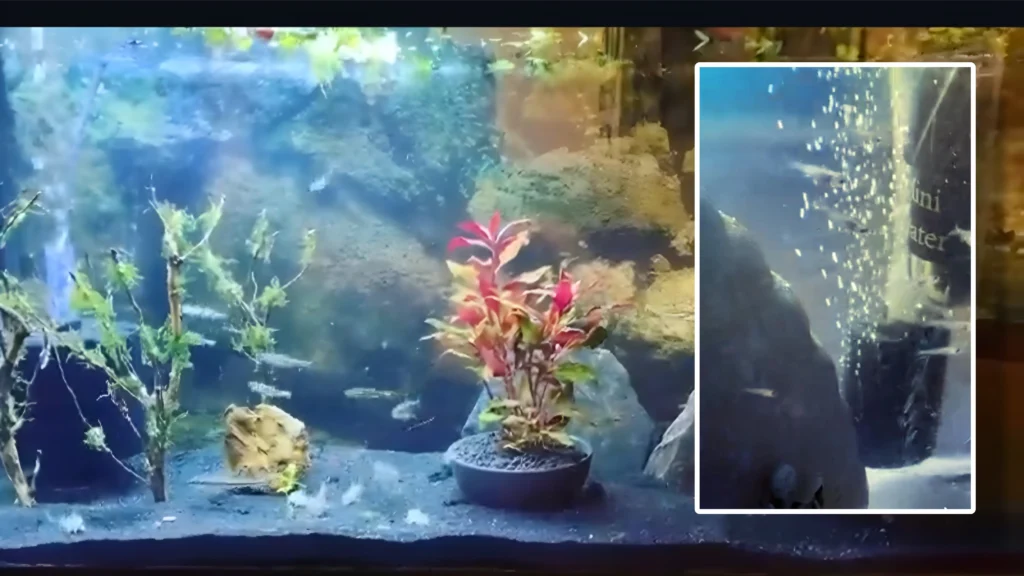
- Sponge filter — critical. A hang-on-back filter will suck up fry through the intake. A simple sponge filter powered by an air pump is the safest option
- Small adjustable heater — I use a 50W heater; it’s more than enough for a 10-gallon
- Air pump and airline tubing
- Spawning substrate — either glass marbles covering the bottom, or a fine mesh spawning net suspended a few inches from the bottom (eggs fall through; parents can’t reach them)
- A lid — danios are jumpers. Trust me on this one.
Best Substrate and Plants for Egg Protection
The whole point of your substrate choice is one thing: getting the eggs out of reach of the parents. Zebra danios will eat their own eggs. Every time. Without hesitation. So you need to physically prevent access.
Glass marbles work well and are easy to clean. A spawning mesh net works even better — the eggs fall straight through the 2mm gaps and settle safely below. If you want to add plants, Java moss is excellent — it naturally catches and hides eggs while being easy to maintain.
I personally use a combination: a layer of marbles at the bottom with a few clumps of Java moss on top. It’s not elegant, but it works consistently.
Water Parameters (Temperature, pH, Hardness)
This is where a lot of beginners overthink things. Zebra danios aren’t demanding. But getting the parameters into the right range absolutely does make spawning more likely and more productive.
| Parameter | Ideal Range for Breeding |
|---|---|
| Temperature | 72°F–78°F (22°C–26°C) |
| pH | 6.5–7.5 |
| Water Hardness (GH) | 5–12 dGH |
| Ammonia / Nitrite | 0 ppm (always) |
| Nitrate | Below 20 ppm |
I keep my breeding tank at 76°F (24°C) consistently. That’s the temperature where I’ve seen the most reliable spawning activity over the years.
Once your tank is ready, the next challenge is picking the right fish — and knowing which ones are which.
Male vs Female Zebra Danio — How to Tell the Difference
Honestly? I got this wrong the first time. I thought I had a male/female pair. Turns out I had two males. They chased each other around the tank for three days and produced exactly zero eggs. Lesson learned.
Here’s how to avoid that mistake.
Body Shape Differences
The easiest way to sex zebra danios is by body shape — specifically the belly.
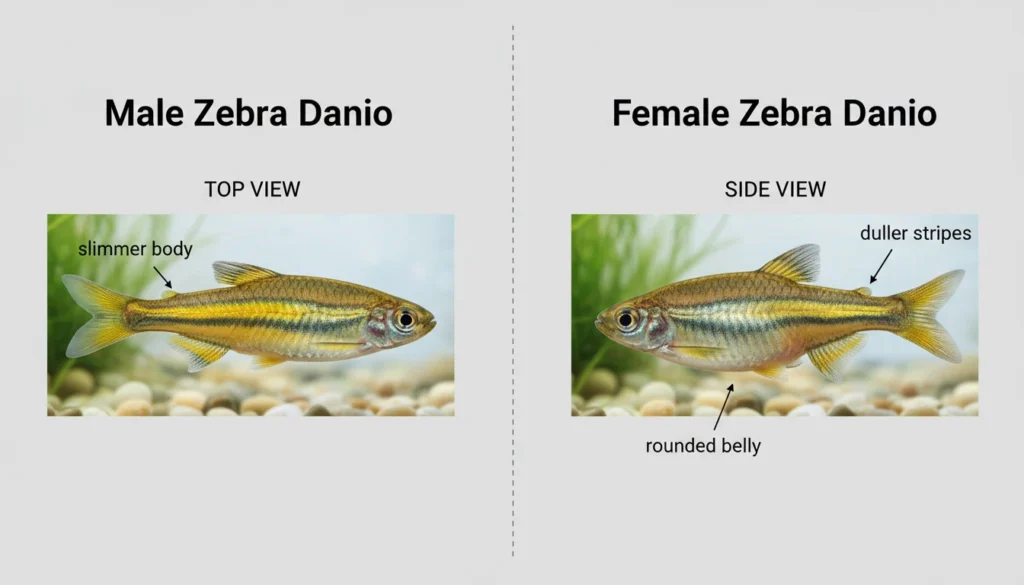
Females are noticeably rounder and wider through the midsection, especially when they’re full of eggs. From above, a ready-to-spawn female looks almost chunky compared to the males. Males are slimmer, more streamlined, and often slightly more intensely colored — their blue and silver horizontal stripes tend to appear more vivid.
Age and conditioning matter too. A female that’s been fed well on live or frozen foods for 1–2 weeks will have a visibly swollen belly. That’s your clearest sign she’s ready.
(Image: side-by-side comparison of male and female zebra danio, showing body shape difference from above and the side)
Behavioral Cues During Spawning Season
When conditions are right, males become noticeably more active — chasing the females around the tank, nudging at their bellies, and generally being relentless about it. If you’re seeing a lot of active chasing, that’s a good sign your fish are ready to spawn.
A lot of people ask me: “How many males and females should I put in the breeding tank?” My answer: two males per one female, or a 2:1 ratio. The gentle competition between males stimulates more vigorous spawning behavior from the female, which means more eggs released.
Triggering Spawning — The Step-by-Step Process
Wondering why your danios just swim around and ignore each other? This is probably why.
Spawning doesn’t happen automatically. You need to condition your breeders, set the right environment, and then give them a specific trigger. Once I figured this out — and I mean really understood it, not just read about it — my success rate went from “maybe” to “almost always.”
Conditioning the Breeders with Live Food
Before introducing your fish to the breeding tank, spend 7–10 days feeding them well. Not just flake food — real, nutrient-dense food.
Live or frozen brine shrimp is my go-to. I feed twice daily, small amounts that they finish within 2 minutes. Daphnia (water fleas) and micro worms are also excellent. The idea is to get the female physically plump with eggs and the males energized and ready.
I’ve tried skipping this step. It doesn’t go well. The spawn is either smaller or doesn’t happen at all.
The Water Change Trick That Triggers Spawning
This is the single most reliable spawning trigger I’ve used. It mimics the natural conditions that signal the start of rainy season in the danio’s native South Asian habitat.
Here’s exactly what I do:
- Set up the breeding tank the night before with clean, conditioned water at 76°F (24°C)
- Introduce your conditioned breeders in the evening — one female, two males
- In the morning (danios typically spawn at dawn), do a 20–25% water change using water that’s 2°F–3°F cooler than the tank
- Increase the light in the room or aim a small lamp at the tank to simulate morning light
- Wait — spawning usually begins within 1–2 hours of this trigger
That slight temperature drop combined with fresh water is the “signal” your danios are waiting for. It works. Every time I’ve done this properly, spawning has followed.
What Zebra Danio Spawning Behavior Looks Like
You’ll know it’s happening. The males will chase the female intensely, pressing against her sides and belly. She’ll scatter eggs — which look like tiny, clear, slightly yellowish spheres, about 1mm in diameter — and the males will fertilize them as they fall.
The whole process can last anywhere from 30 minutes to a few hours. Once the female appears spent (belly noticeably flatter, less active chasing), it’s done.
Remove the adults immediately. Don’t wait. Don’t think “they’ll be fine for a while.” They won’t be. They will eat every egg they can find.
Caring for Zebra Danio Eggs
You’ve triggered spawning. The adults are out of the tank. Now what?
How to Spot Fertilized vs Unfertilized Eggs
Within 24 hours, the difference becomes clear. Fertilized eggs remain transparent to slightly amber — you can sometimes see a small dark dot (the developing embryo) in the center if you look closely with a flashlight. Unfertilized eggs turn white and opaque. They’ll also start to develop fungus if you leave them in.
Remove the white eggs with a pipette or turkey baster as soon as you spot them. Fungus spreads. One fungused egg can take out a cluster of healthy ones nearby.
Protecting Eggs from Adult Fish
Danio parents WILL eat their own eggs. No exceptions. Remove them.
If you used marbles, the eggs should be resting safely below them, out of reach. If you used a spawning mesh, the eggs are beneath it. Either way, once the adults are out, leave the egg layer undisturbed as much as possible.
Keep the tank in a low-light area for the incubation period. Strong light can stress developing eggs. A gentle current from your sponge filter is fine — actually good for oxygenation.
How Long Before Eggs Hatch?
At 76°F (24°C), zebra danio eggs typically hatch in 48–72 hours. At cooler temperatures, it takes longer — at 70°F (21°C), you might wait up to 4–5 days.
Hatching is exciting — but fry care is where most beginners make mistakes.
Raising Zebra Danio Fry — Feeding and Growth
I lost my first batch of fry to an overpowered filter intake. I’d put a hang-on-back filter in the fry tank because I thought more filtration was better. Within two days, I couldn’t find most of the fry. The ones that survived were lethargic and barely visible.
Never again.
Here’s what actually works.
First Foods for Fry (Infusoria, Liquid Fry Food, Micro Worms)
Newly hatched zebra danio fry are tiny — we’re talking 2–3mm at most. Their mouths are minuscule. Regular flake food, even crushed, is too large for the first week.
For the first 3–5 days, newly hatched fry don’t actually eat — they absorb their yolk sac. Once you see them swimming horizontally (instead of just hanging vertically near the surface), they’re ready to feed.
Start with:
- Infusoria — microscopic organisms you can culture at home by leaving a jar of tank water with a bit of lettuce in sunlight for a few days. It’s messy, but it works.
- Commercially prepared liquid fry food — brands like Sera Micron or similar products work well and are much easier to manage than culturing infusoria yourself
- Micro worms — tiny nematodes, easy to culture, highly nutritious. I started a micro worm culture in week one and fed it to my fry from day five onwards. They went crazy for it.
By week 2–3, you can start introducing baby brine shrimp and very finely crushed flake food.
Water Changes Without Sucking Up the Fry
Water quality is critical, but standard water change methods are dangerous for fry this small. Here’s my approach:
Use a thin airline tube instead of a siphon hose — the flow is slow enough that fry can escape if they drift near. Cover the end of the tube with a piece of fine mesh or a small section of nylon stocking secured with a rubber band. Change 10–15% of the water every 2 days, using water that’s been pre-warmed to match the tank temperature exactly.
Even a 2°F difference can stress fry at this stage.
When Can Fry Join the Main Tank?
| Age | Average Size | Milestone |
|---|---|---|
| Day 1–5 | 2–3mm | Absorbing yolk sac, not feeding yet |
| Day 5–14 | 3–5mm | Free swimming, accepting micro foods |
| Week 3–4 | 5–8mm | Accepting baby brine shrimp, crushed flake |
| Week 6–8 | 10–15mm | Safe to introduce to community tank |
Most of my fry are ready to join the main tank between 6 and 8 weeks old, when they’re large enough not to be bullied or accidentally eaten by adults. Don’t rush this. An extra week in the grow-out tank is always worth it.
Frequently Asked Questions
How long does it take for zebra danio eggs to hatch? At the ideal breeding temperature of 76°F (24°C), zebra danio eggs hatch in 48–72 hours. Cooler water slows development — at around 70°F (21°C), expect 4–5 days. Temperature stability matters here more than the exact number, so avoid letting the tank fluctuate by more than 1–2°F during incubation.
How many eggs do zebra danios lay at once? A healthy, well-conditioned female can release anywhere from 100 to 300 eggs in a single spawn — sometimes more. That said, not all of them will be fertilized, and some will inevitably be eaten or fungused. In my experience, successfully raising 30–80 fry from a single spawn is a realistic and satisfying outcome for most home breeders.
Can zebra danios breed in a community tank? Technically, yes — spawning can happen in a community tank. But in practice, the eggs are almost always eaten within minutes, by the danios themselves or by other tank inhabitants. If you actually want fry to survive, a separate breeding tank is the only reliable approach. I learned this the hard way after “spotting” three spawning events in my community tank and ending up with zero fry.
What do zebra danio fry eat in the first week? For the first 3–5 days, they’re still absorbing their yolk sac and don’t need external food. Once they’re free swimming, start with infusoria or commercial liquid fry food. Micro worms are excellent from day 5 onward. Avoid crushed flake food until week 2–3 — it fouls the water quickly and their mouths are too small for even finely ground flake in the early days.
How do I know if my zebra danio eggs are fertilized? Within 24 hours of spawning, unfertilized eggs turn white and opaque — sometimes developing a fuzzy white fungus coating. Fertilized eggs stay clear to slightly amber and remain firm-looking. Use a small flashlight and look closely — you can sometimes spot a dark pinpoint in the center of a healthy egg. Remove the white ones as soon as you see them, or the fungus will spread to the healthy eggs nearby.
You Did It — Now Go Watch Them Grow
Here’s the thing: you now know more about zebra danio breeding than 90% of beginners who set up their first tank. That’s not an exaggeration. Most people wing it, lose their eggs, get frustrated, and stop. You won’t — because you understand why each step matters.
Get your breeding tank set up. Condition your breeders for a week. Do the water change trigger in the morning. Then stand back and watch something genuinely incredible happen.
What I love most about keeping fish — and this took me years to fully appreciate — is that the process itself is the reward. Not just the fry at the end. The preparation, the patience, the quiet early-morning tank checks. It becomes a practice. A ritual, almost.
If there’s one thing I want you to walk away with, it’s this: don’t overcomplicate it. Zebra danios want to breed. Your job is just to give them a safe, comfortable space to do what they already know how to do.
Drop a comment below and let me know how your first spawn goes — I read every one. And if this guide helped you, share it with a fellow fish keeper who’s been thinking about trying their first breed.
Ready to try another easy breeder? Check out our guppy breeding guide for beginners — guppies are a fantastic next step once you’ve got your first danio spawn under your belt.
— Kd Sivanath

KD Sivanath is an aquarium enthusiast with over 7 years of experience in fish keeping and breeding. He specializes in helping beginners learn simple and effective methods for breeding popular aquarium fish. Through this blog, he shares practical tips, real-life experience, and easy-to-follow guides to help anyone start and succeed in fish breeding.