
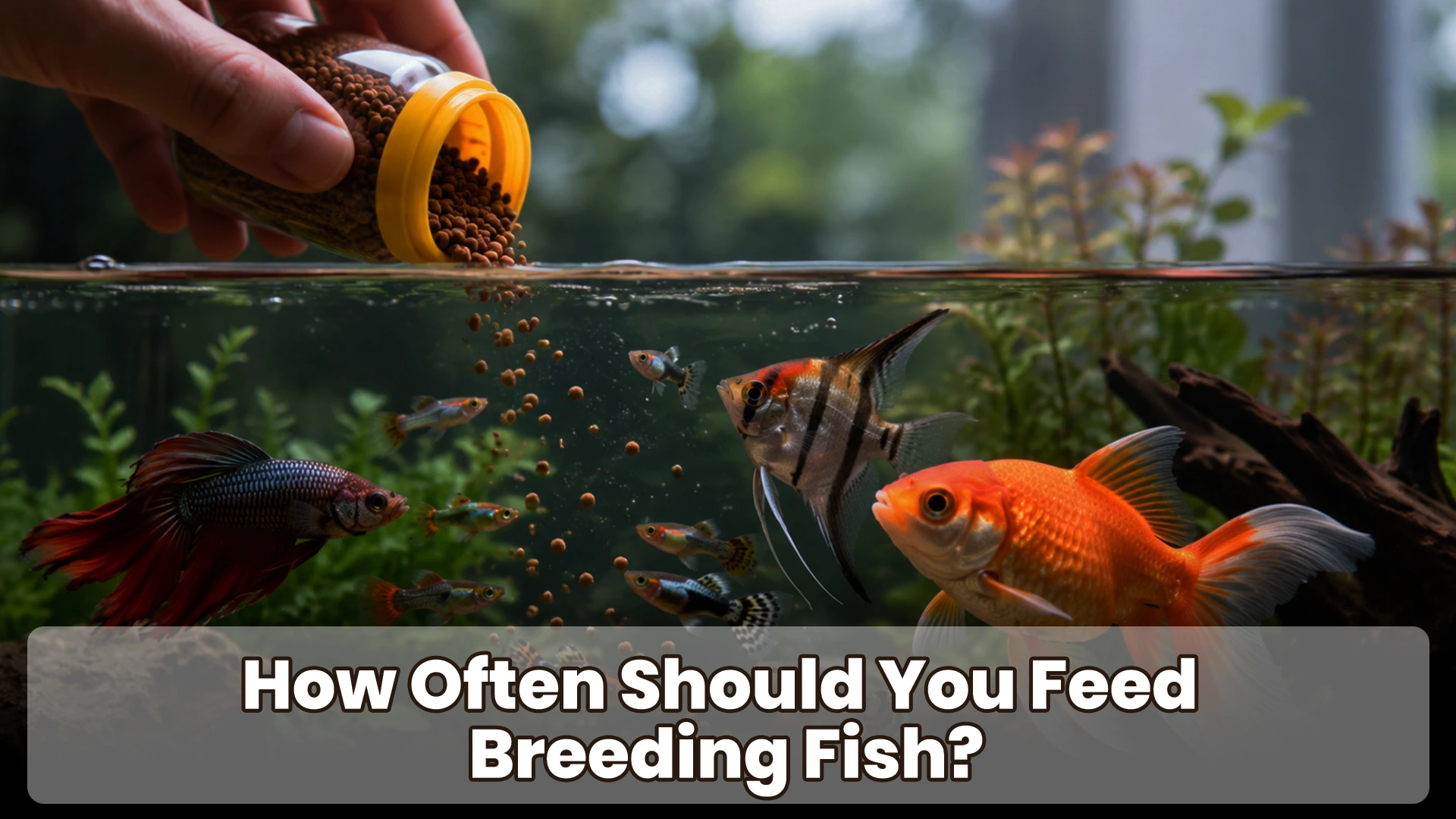
Feeding frequency isn’t just a small habit — it’s one of the most overlooked reasons breeding attempts fail. When breeding fish don’t get consistent, well-timed nutrition, the effects show up everywhere: fewer eggs per spawn, lower fertilization rates, weaker fry survival, and sometimes no spawning behavior at all. On the flip side, overfeeding causes its own damage — ammonia spikes, fatty deposits around the ovaries, and stressed fish that simply shut down reproductively.
Research on broodstock nutrition backs this up. Broodstock diet has long been known to affect fecundity, fertilization rate, egg quality, embryo development, and larval quality, as well as overall hatchery success. In other words, what and how often you feed a breeding pair directly shapes not just whether they spawn, but the quality of what comes out of that spawn. Protein requirements vary significantly by species — from around 30% dietary protein for an omnivore like the goldfish up to 50% for a carnivorous species like discus — which is exactly why generic “just feed them more” advice tends to fail so often.
I learned most of this the hard way, honestly. I remember the exact Saturday morning that broke me a little — three weeks into conditioning a betta pair, clean water, perfect temperature, a nice tannin-stained tank with Indian almond leaves. Nothing. Not a single bubble nest. I sat there with my coffee going cold, genuinely confused, because everything the care sheets told me to check was fine. Turns out the missing piece wasn’t water chemistry at all — it was feeding frequency, something I’d almost completely overlooked because I was so focused on getting the tank “perfect.”
By the end of this guide, you’ll understand exactly how often to feed breeding fish (and why), what foods actually trigger spawning behavior, species-specific schedules for betta, guppy, goldfish, angelfish, and zebra danio, and the common feeding mistakes that quietly sabotage otherwise well-set-up breeding tanks.
Why Feeding Frequency Matters More Than You Think
In the wild, food abundance and spawning season are tightly linked for most tropical species — rainy seasons bring a surge of insects, larvae, and organic matter, and fish have evolved to read that abundance as a cue that conditions are right for reproduction. Feed sparingly in captivity, and you’re essentially telling your fish’s body “conditions aren’t right yet,” even if your water parameters are flawless.
The Link Between Nutrition and Egg Production
Egg production is metabolically expensive. A female needs to build up fat and protein reserves specifically for vitellogenesis — the process where the liver produces yolk proteins that get transported to developing eggs. Goldfish can lay anywhere from 500 to 1,000 eggs in a single spawn, and producing that volume takes real reserves. Research on ornamental fish nutrient requirements has shown that essential amino acid and protein needs vary substantially between species, which is part of why a one-size-fits-all feeding approach rarely produces consistent results.
What Happens When You Underfeed or Overfeed Breeders
Underfeed, and you get thin, stressed fish showing little to no interest in courtship behavior. Overfeed, and you’re not off the hook either — bloating, fatty liver, and fouled water from uneaten food can shut breeding down just as effectively. It’s a narrow window, not a “more is always better” situation.
Real Example — My Betta Pair That Wouldn’t Spawn Until I Changed This
That pair I mentioned earlier — I was feeding them once a day, standard pellets, small portion, because I didn’t want to overfeed and foul the water. Reasonable logic, wrong conclusion. That once-daily routine was signaling “resources are scarce” to their bodies. I switched to three smaller feedings a day, mixing in frozen bloodworms, and within five days the male was flaring aggressively and had built a proper bubble nest. Five days, after three weeks of absolutely nothing.
Once you understand why frequency matters, the next question is obvious — so how many times a day should you actually be feeding them?
How Many Times to Feed Breeding Fish Per Day
General Rule: 2-4 Times Daily for Most Species
For most breeding-conditioned fish, 2 to 4 small feedings a day tends to work best. Not one large meal — smaller, spaced-out portions that mimic natural foraging patterns and keep hormonal signaling active throughout the day rather than in one spike.
Species-Specific Frequency
Generic advice falls apart here because species have genuinely different metabolic rates and reproductive strategies.
| Species | Feeding Frequency | Protein Focus | Notes |
|---|---|---|---|
| Betta | 2-3x daily | High (carnivore) | Small portions; live food boosts flaring/nesting behavior |
| Guppy | 2-3x daily | Moderate-high | Live/frozen food increases fry count and batch size |
| Goldfish | 2x daily | Moderate (omnivore) | Prone to bloat; occasional fasting day recommended |
| Angelfish | 3-4x daily | High | Higher metabolism; needs frequent smaller meals |
| Zebra Danio | 3x daily | Moderate-high | Fast metabolism; live food strongly triggers spawning |
Signs You’re Feeding Too Often or Not Enough
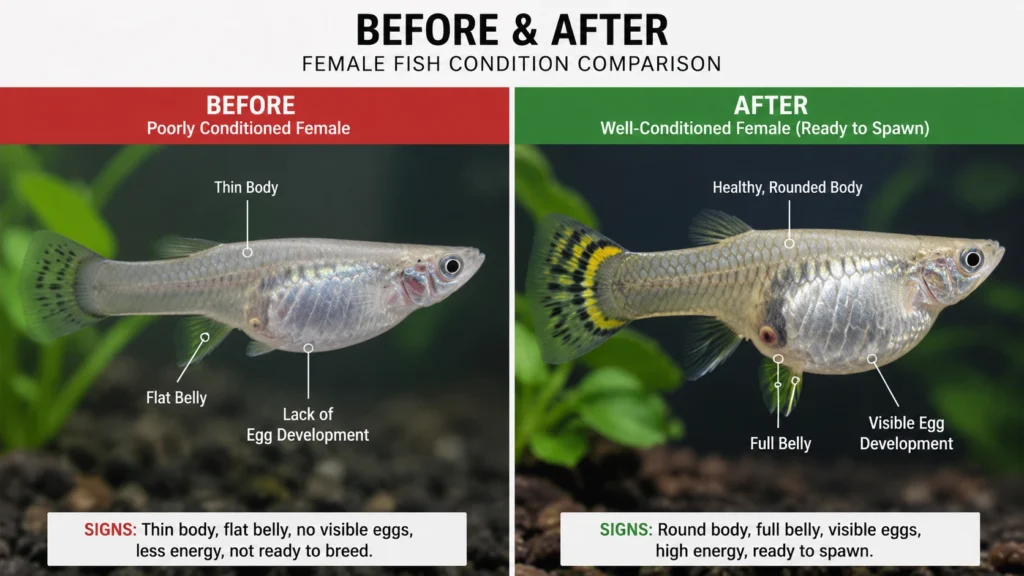
If food is still sitting uneaten after two minutes, that’s an overfeeding issue — even if frequency is technically correct, portion size isn’t. If your female looks noticeably thin, or your pair seems lethargic and disinterested in each other despite good water, that’s often an underfeeding problem — and it’s the one hobbyists usually check last, after water and compatibility.
Frequency is only half the puzzle — what you’re actually feeding them matters just as much.
The Best Feeding Schedule for Breeding Fish (Sample Timetable)
Daily Feeding Blueprint
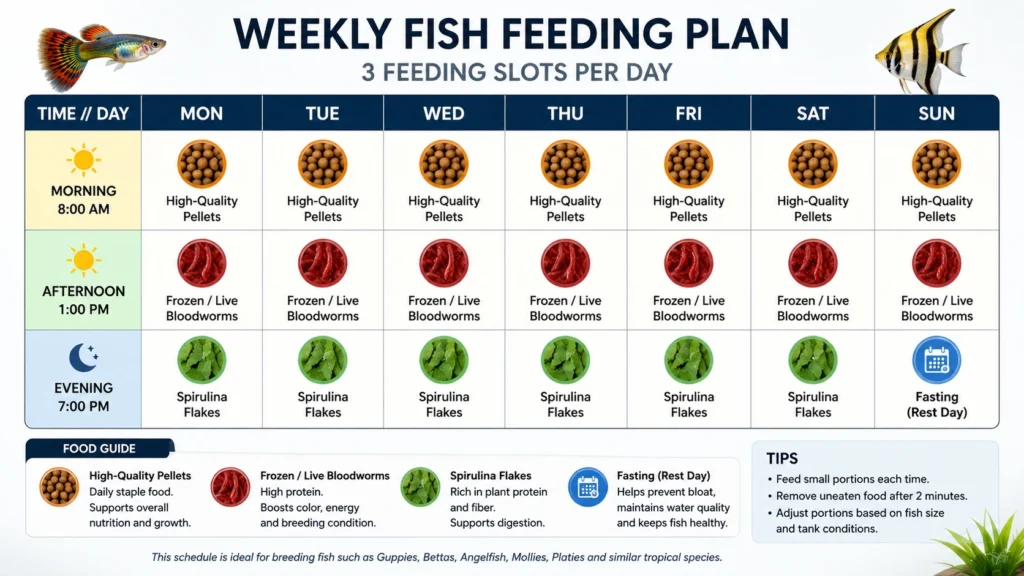
Here’s roughly what I run across most of my breeding tanks now:
- Morning (7–8 AM): Live or frozen food (brine shrimp, daphnia)
- Midday (1–2 PM): High-quality pellets or flakes
- Evening (6–7 PM): Frozen bloodworms, or repeat morning live food
Weekly Variation
I don’t feed identically every single day. Two or three days a week lean more heavily on live/frozen protein for conditioning, while the rest stay on a moderate pellet-based rotation. This variation seems to keep fish more responsive than an identical routine every day — and it also reduces the risk of nutrient gaps from any single food type.
Adjusting Schedule for Working Hobbyists
Not everyone is home at 1 PM — I wasn’t, for years. An auto-feeder handles the midday pellet feeding reliably; save live and frozen food for mornings before work and evenings after. A few practical tips if you go this route:
- Use a feeder with adjustable portion dials, not just timer-only models, to avoid overdosing
- Test the feeder’s output for a week with the tank empty before trusting it with live fish
- Never load frozen or live food into an auto-feeder — it’s designed for dry pellets only
Weekend vs. Weekday Consistency
Try not to let weekends become “feast days” just because you’re home more. Erratic swings between light weekday feeding and heavy weekend feeding can confuse spawning signals more than steady, moderate feeding does.
A schedule only works if you’re feeding the right food — let’s talk conditioning diets.
Fish Conditioning Diet — What to Feed Before Spawning
Live and Frozen Foods That Trigger Spawning
Live food is considered an excellent conditioning agent for broodstock — its high nutrient concentration encourages spawning activity and increases breeding success rates. Here’s how the main options compare:
| Food Type | Protein Level | Key Benefit | Best For |
|---|---|---|---|
| Bloodworms | High | Strong conditioning trigger, high iron | Betta, angelfish, goldfish |
| Brine Shrimp | Moderate-high | Excellent for fry and adult conditioning | Guppy, zebra danio, all fry |
| Daphnia | Moderate | Natural laxative, aids digestion | Goldfish, general conditioning |
| Mosquito Larvae | High | Strongly mimics natural diet, high activity trigger | Betta, danio |
| High-Quality Pellets | Balanced | Consistent baseline nutrition | All species, daily staple |
| Frozen Foods | Varies | Safer than live (less disease risk) | Beginners, all species |
The most important live foods used in ornamental fish conditioning include artemia (brine shrimp), rotifers, daphnia, copepods, tubifex, bloodworms, and mosquito larvae — and each brings a slightly different nutrient profile to the table, which is part of why rotating rather than relying on a single food type tends to produce better results.
Protein-Rich vs. Balanced Diet — Getting the Ratio Right
My honest take: protein matters, but balance matters more. I aim for roughly 60% high-protein live or frozen food and 40% quality flake or pellet during a conditioning window rather than going all-in on protein. This lines up with what the research shows too — studies indicate that around 30-35% dietary protein tends to enhance egg and larval quality in many species, not maximum protein at all costs.
Foods to Avoid or Limit During Conditioning
I once overfed bloodworms thinking more protein equals faster spawning. Instead, I got a bloated, lethargic female and fouled water within two days. Avoid feeding excessive fatty foods back-to-back, and be cautious with dry foods that expand in water (like some pellet brands) since they can cause digestive blockages in smaller-bodied breeders like guppies.
Feeding the right food is powerful, but timing and storage mistakes can undo all your effort — here’s how to avoid the most common ones.
Common Feeding Mistakes That Delay or Prevent Spawning
Overfeeding and Water Quality Crashes
Uneaten food breaks down into ammonia within hours, and ammonia spikes are one of the fastest ways to knock fish out of spawning readiness entirely — even a brief spike can delay conditioning by days.
Feeding Only One Food Type
Relying solely on flakes, or solely on bloodworms, creates nutritional gaps over time. Fish conditioned on a single food source often show reduced egg viability compared to those on a rotated, varied diet — this matches what I’ve consistently seen with my own goldfish batches.
Poor Food Storage
Frozen food that’s been thawed and refrozen loses nutritional value fast, and live food kept in dirty, poorly aerated containers can introduce pathogens straight into your breeding tank. I lost an entire batch of daphnia cultures to poor storage once — cheap mistake, expensive lesson.
Feeding Immediately After Water Changes
Fish are already stressed right after a water change; adding a heavy feeding on top of that stress can suppress appetite and, over repeated cycles, disrupt conditioning consistency. I now wait at least 30–45 minutes after a water change before feeding.
Inconsistent Feeding Times
A lot of people ask me about this in breeding forums, and honestly, erratic feeding schedules are behind more “why won’t my fish breed” posts than bad water ever is.
Ignoring Female-Specific Nutrition Needs
Females often need slightly more food during conditioning since they’re the ones producing eggs. Feeding a pair identically sometimes leaves the female under-conditioned relative to what she actually needs — something I didn’t fully appreciate until my second or third breeding attempt.
Avoiding these mistakes puts you ahead of most hobbyists — but timing your feeding around the actual spawning window is where real success happens.
Feeding Before, During, and After Spawning
Pre-Spawn Conditioning Window (7–14 Days)
I generally condition for 10 to 14 days before introducing a pair, using the increased frequency and live-food-heavy approach covered above. This window gives females enough time to build adequate egg reserves without over-conditioning into obesity.
| Phase | Duration | Feeding Focus |
|---|---|---|
| Pre-spawn conditioning | 10-14 days | High protein, 3-4x daily, live/frozen heavy |
| Active spawning | 1-3 days | Minimal to none |
| Post-spawn recovery | 5-7 days | Light, gentle portions, easily digestible food |
Should You Feed During Active Spawning?
Light feeding only, or none at all, during the actual spawning act — you don’t want to disturb the pair or cloud the water right as eggs are being laid and fertilized.
Post-Spawn Recovery Diet for Parent Fish
After spawning, especially for species like goldfish or angelfish where the female is visibly spent, go back to smaller, gentler portions to help her recover without overtaxing an already stressed system.
Once you’ve nailed the full feeding cycle, your breeding success rate improves dramatically — but let’s quickly answer the questions hobbyists ask most.
FAQs — How Often Should You Feed Breeding Fish
How many times a day should breeding fish be fed? Generally 2 to 4 smaller feedings daily, depending on species — angelfish and zebra danio often do best on the higher end.
What is the best food to feed fish before breeding? Live or frozen bloodworms, brine shrimp, and daphnia work well for conditioning, mixed with quality pellets for nutritional balance.
Can overfeeding stop fish from breeding? Yes — it’s one of the most common causes. Excess food fouls water quickly and can cause bloating that suppresses spawning behavior.
Should I feed fish during spawning? Light or no feeding during the actual spawning event is best, to avoid disturbing the pair or clouding the water.
How long should I condition fish before breeding? Typically 10 to 14 days of increased, protein-rich feeding before pairing fish for spawning.
Do male and female breeding fish need different feeding amounts? Often yes — females producing eggs generally benefit from slightly more food during conditioning than males.
How much protein should breeding fish get in their diet? Research suggests roughly 30-35% dietary protein supports good egg and larval quality in many ornamental species, though carnivorous species like discus may need up to 50%.
Can I use an auto-feeder for breeding fish? Yes, for dry pellets during midday feedings — but reserve live and frozen food for feedings you do by hand.
What happens if I feed breeding fish inconsistently? Erratic feeding schedules can confuse hormonal signaling tied to spawning readiness and are a common, overlooked cause of breeding failure.
Is live food necessary for breeding fish, or can frozen work? Frozen food works well and carries lower disease risk than live food, though live food often produces a stronger conditioning response due to movement-triggered feeding behavior.
Key Takeaways
Feeding frequency is a signal, not just sustenance — 2 to 4 smaller feedings daily, built around live and frozen protein sources during a 10–14 day conditioning window, gives most breeding species what they need without tipping into overfeeding territory. Species-specific adjustments matter, water quality and feeding timing are linked more closely than most hobbyists realize, and consistency beats intensity almost every time.
Final Thoughts
Looking back at that Saturday morning with my cold coffee and my uncooperative bettas, I wish someone had just told me to check feeding frequency first — not the water, not the decorations, the feeding. If there’s one thing I want you to walk away with, it’s that breeding success is rarely one dramatic fix. It’s steady, unglamorous consistency in the small stuff, feeding included. Give it time, adjust based on what your specific fish are telling you, and don’t get discouraged if the first attempt doesn’t work. Mine didn’t either.

KD Sivanath is an aquarium enthusiast with over 7 years of experience in fish keeping and breeding. He specializes in helping beginners learn simple and effective methods for breeding popular aquarium fish. Through this blog, he shares practical tips, real-life experience, and easy-to-follow guides to help anyone start and succeed in fish breeding.