
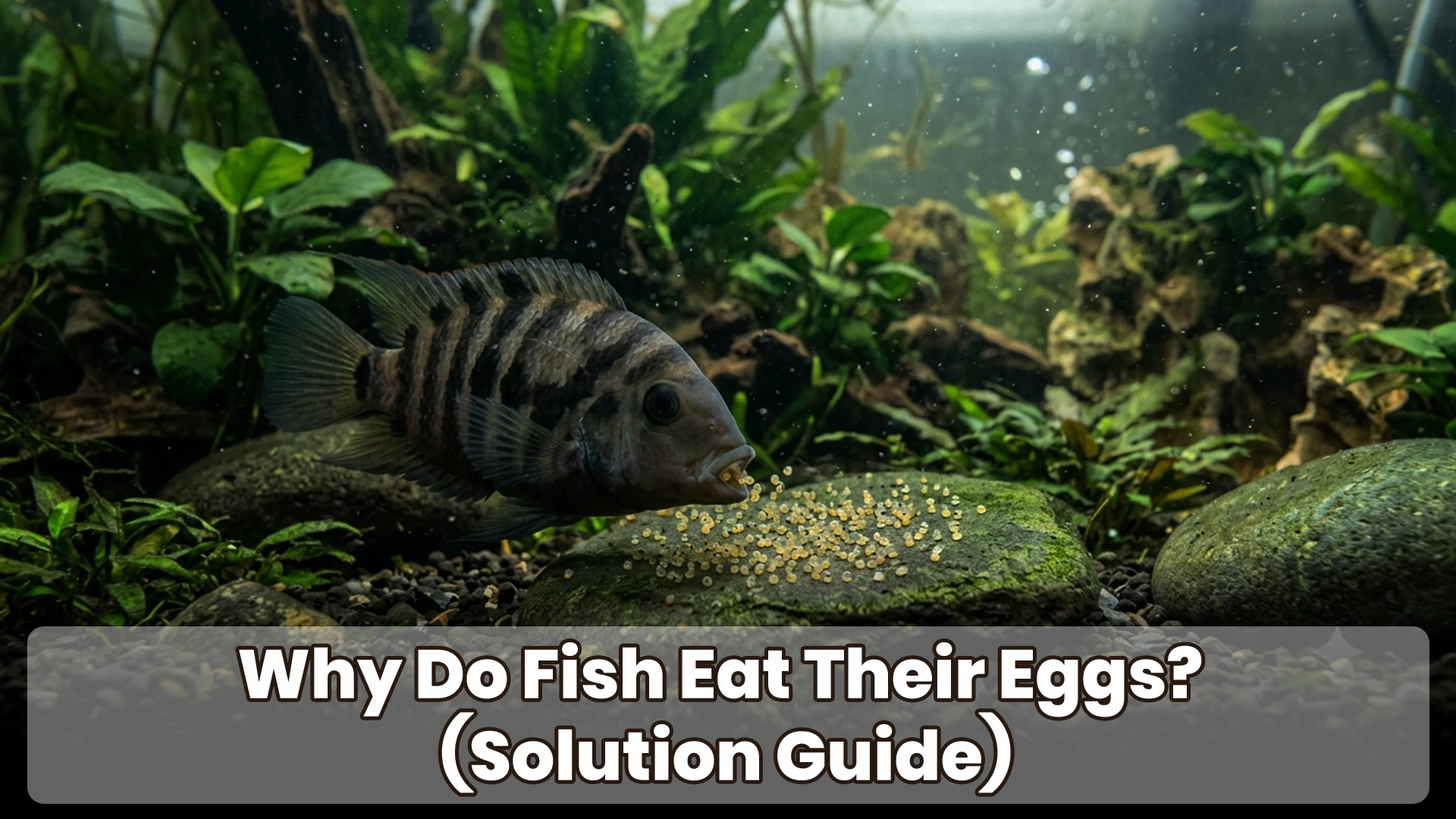
Fish eating their own eggs is one of the most misunderstood problems in home aquarium breeding. It looks alarming the first time you see it. But in most cases, it isn’t cruelty, and it isn’t a sign that something is broken in your tank.
It’s usually natural behavior driven by a mix of instinct, stress, water conditions, nutrition, and species-specific habits. Some species are simply more prone to it than others, and even experienced breeders deal with this from time to time.
By the end of this guide, you’ll understand exactly why fish eat their eggs, how to reduce the chances of it happening, how to improve overall egg survival, and which breeding practices actually make a difference. We’ll also walk through real examples, common mistakes, and long-term habits that tend to work well across most species.
Before we get into the science and the fixes, though, I want to share a personal moment that made this topic click for me. It was a Saturday morning, and I’d been checking on my betta’s bubble nest daily for almost two weeks. The night before, I’d watched him wrap around the female during spawning. Eggs everywhere. I went to bed thinking I’d finally pulled it off.
The next morning, the nest was gone. Not reduced — gone. And he was swimming around like nothing had happened. That was my first real introduction to filial cannibalism, and it’s the reason I started paying much closer attention to what triggers this behavior.
If something similar has happened to you, you’re not doing anything fundamentally wrong. This is far more common than most beginners expect.
Why Do Fish Eat Their Eggs? The Real Reasons Behind This Behavior
Let’s start with the science. Filial cannibalism — when a parent eats some or all of its own offspring — has been documented across many fish species, not just aquarium favorites. Research has shown that this behavior often functions as an energy-conservation strategy.
If a fish senses a clutch isn’t viable, or that raising it will demand more energy than it can afford, consuming the eggs recovers some of that nutritional investment. It sounds harsh, but it’s a survival mechanism refined over generations.
Instinct, Not Cruelty — Understanding Filial Cannibalism
Aquarium breeding experts generally agree that this instinct is rarely about the parent “rejecting” the eggs emotionally. It’s closer to a cost-benefit calculation happening on a biological level.
Some species are far more prone to this than others. Understanding which ones apply to your setup is the first step toward prevention.
Stress and Environmental Triggers
Stress is probably the single biggest trigger for egg eating in home aquariums. A filter that’s too strong, sudden lighting changes, tapping on the glass, or a new tank mate swimming too close to the nest can all push a fish into “abandon and consume” mode.
This is the issue I see most often with beginner breeders. In hindsight, it was likely my own problem with that betta — a water change too close to spawning time may have unsettled him more than I realized.
Nutritional Deficiency in Breeding Fish
Diet plays a bigger role than most people expect. Fish that go into a spawn without enough protein or the right vitamins are statistically more likely to eat their eggs afterward.
Their body is essentially signaling that it doesn’t have the reserves to support both itself and a clutch. I learned this firsthand after conditioning a group of mollies on flake food alone — a mistake I don’t repeat anymore.
A friend of mine once watched her mollies consume an entire fry batch within roughly three hours of birth. The trigger turned out to be a filter change that morning, which had stirred up the tank without making it dirty. The disturbance alone was enough.
Once you understand the “why,” the practical fixes start to make a lot more sense.
The Most Common Culprits — Which Fish Eat Their Eggs Most Often?
Not every species behaves the same way here. Some fish are simply more prone to filial cannibalism than others, and knowing this in advance helps you prepare.
Bettas and Bubble Nest Disruption
Male bettas build bubble nests and guard eggs fiercely — until something disrupts that instinct. Strong filter flow, sudden vibrations, or a female lingering too close after spawning are common triggers.
Results can vary between individual bettas, even within the same batch of fry.
Cichlids Under Stress
Cichlids are known for being attentive parents, but stress changes that quickly. Wrong tank mates, fluctuating water parameters, or simply being a first-time breeding pair can lead to an early clutch being eaten.
Interestingly, many cichlid pairs become noticeably better guardians by their second or third spawn.
Livebearers (Guppies, Mollies) and Fry Predation
Guppies and mollies give birth to live fry rather than laying external eggs, but the same predatory instinct applies. A female guppy can produce 20 to 100 fry in a single birth, and in a bare tank with no hiding spots, adult fish will often treat that birth like an easy meal.
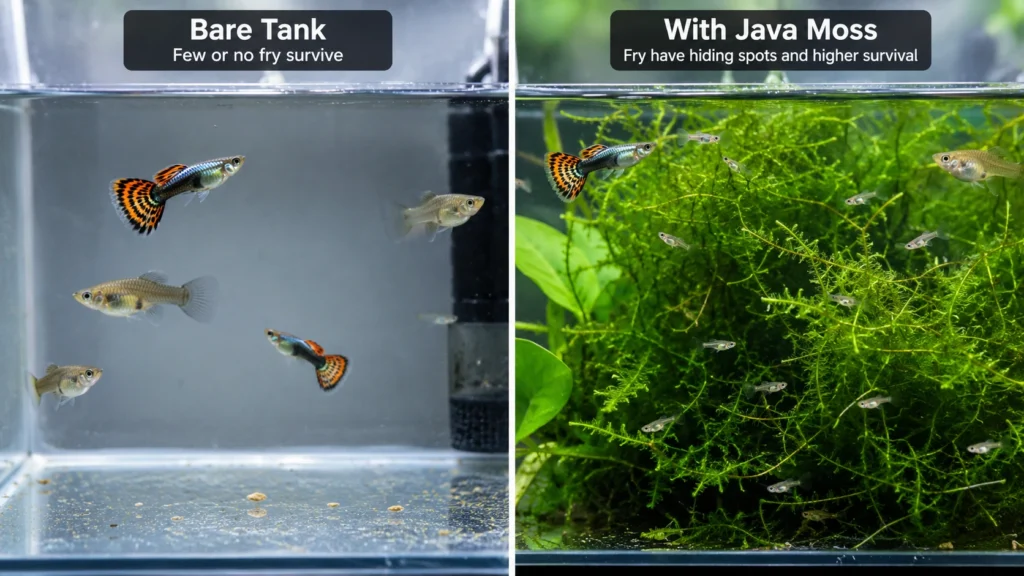
This exact comparison played out for me directly. One 10-gallon tank with no plants lost nearly every fry overnight. A second tank, same species and same day, but filled with java moss, had over a dozen visible fry three days later.
Different species require slightly different breeding conditions, so it’s worth researching your specific fish before assuming a general fix will work.
Fish Breeding Problems That Lead to Egg Loss
Beyond instinct and species behavior, certain setup mistakes make egg eating far more likely. Most breeders, myself included, run into at least one of these early on.
Overcrowded Breeding Tanks
Too many fish in a small space raises stress for everyone, including the breeding pair. A general guideline is roughly 1 gallon of water per inch of adult fish, though more space is almost always better for breeding setups.
Poor Water Quality and Ammonia Spikes
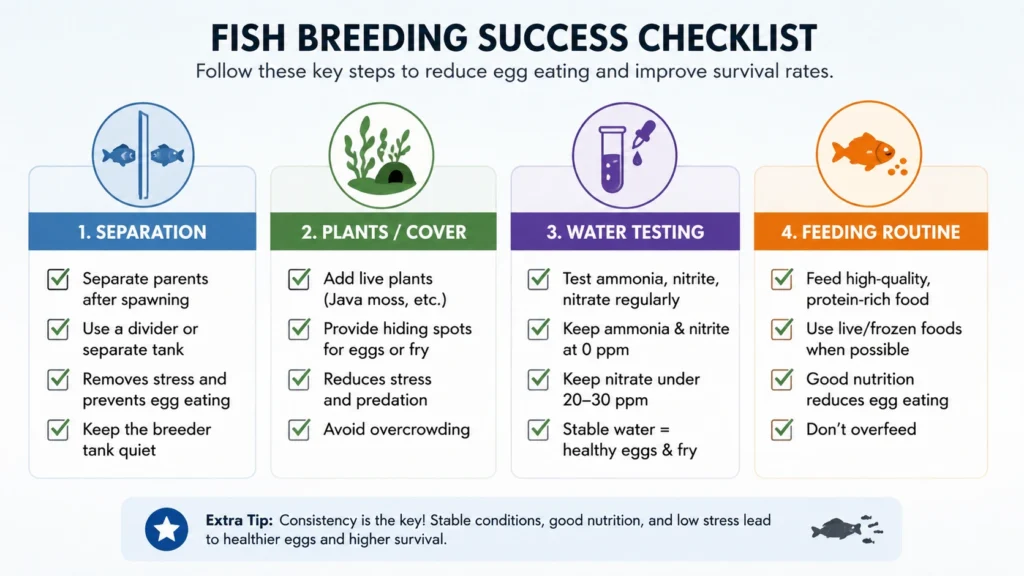
Fish are highly sensitive to ammonia, and even a small spike above 0.25 ppm can trigger stress-driven egg eating. Testing water regularly, not just when something looks off, makes a measurable difference.
Wrong Tank Mates During Spawning
This mistake is easy to overlook. A hobbyist I know once added tetras to an angelfish tank specifically to clean up leftover food, not realizing the tetras would also eat the eggs the moment the parents looked away.
Every one of these problems has a fix, and most of them don’t require expensive equipment.
How to Stop Fish From Eating Eggs — Practical Solutions
Here’s where the actual fixes come in. These are methods that have worked consistently, though results may vary depending on species and setup.
Separate the Breeding Pair or Use a Breeding Tank
The most reliable fix is physically separating the eggs, or fry, from the adults. A simple 5 to 10-gallon breeding tank with a sponge filter works well for most livebearers and small egg-layers.
For bettas specifically, removing the female immediately after spawning often works best, since the male tends to guard the nest well once he isn’t distracted or stressed by her presence.
Add Dense Plants or Spawning Mops
If a separate tank isn’t practical, spawning mops or a thick patch of java moss or hornwort give eggs and fry somewhere to hide. Switching one guppy setup from a bare tank to one with a yarn spawning mop roughly doubled fry survival within a couple of generations.
Control Light, Noise, and Foot Traffic Near the Tank
This step sounds simple, but it matters more than most people expect. Dimming lights near a nest, reducing tank vibrations, and keeping the tank away from high-traffic areas all reduce stress-related egg loss.
Prevention solves most of the problem, but what you do the moment eggs appear matters just as much.
Fish Egg Survival — What To Do the Moment Eggs Are Laid
Once eggs are in the water, timing becomes critical. Fungus and predation can wipe out a clutch within 24 to 48 hours if left unmanaged.
Removing Eggs to a Separate Hatching Container
For egg-scattering species like many tetras and barbs, moving eggs to a separate hatching container within an hour of spawning significantly improves survival rates. Most tropical fish eggs hatch somewhere between 24 hours and 7 days, with warmer water around 78-82°F (25.5-28°C) generally speeding up development.
Using an Air Stone or Gentle Water Movement
Eggs need oxygen, but not turbulence. A gentle air stone with a slow, steady bubble stream keeps water moving enough to prevent stagnation without disturbing eggs or stressing a guarding parent.
Identifying and Removing Fungused (White) Eggs Early
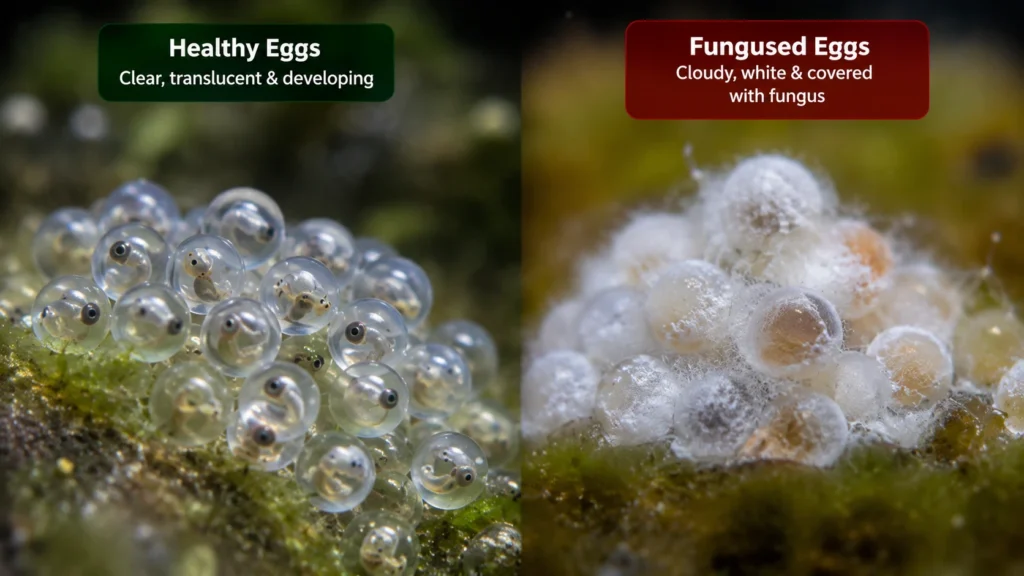
Healthy eggs are typically translucent or slightly amber. Eggs that turn opaque white within a day or two are usually not viable, and leaving them in place risks spreading fungus to healthy eggs nearby.
A small dose of methylene blue on affected eggs has saved more than one clutch for me, particularly after losing an entire angelfish batch to fungal spread early in my breeding experience.
Getting eggs to hatch is one milestone. Keeping the parents calm enough not to eat them is another.
Breeding Fish Egg Care — Long-Term Habits That Actually Work
Preventing egg loss isn’t a one-time fix. It works best as an ongoing routine.
Proper Feeding Before and After Spawning
Conditioning breeding pairs on a high-protein diet, such as live or frozen brine shrimp and bloodworms, for 1-2 weeks before spawning makes a noticeable difference. Underfed parents are more likely to eat eggs simply because their energy reserves are lower.
Switching a group of mollies from flake-only food to a mix including frozen brine shrimp noticeably reduced egg and fry loss within a couple of spawns.
Maintaining Stable Water Parameters
Most tropical breeding species do well within a pH range of 6.5-7.5 and stable temperatures around 76-80°F (24-27°C), though exact needs vary by species. Consistency matters more than hitting an exact number, since sudden swings are what typically cause stress.
Building a Low-Stress Environment (Dim Light, Cover, Routine)
Fish generally respond well to routine. Consistent feeding times, stable lighting schedules, and minimal tank rearranging during breeding windows all contribute to lower stress levels.
One breeder I know started keeping a simple log of feeding times and water changes. Within a few months, she noticed egg-eating incidents dropped sharply once her feeding schedule became consistent rather than occasional.
With these habits in place, egg survival tends to improve steadily over multiple breeding attempts.
Aquarium Fish Breeding Tips for Long-Term Success
Choosing the Right Species for Beginners
Guppies and mollies are generally more forgiving for beginners than sensitive species like discus or angelfish. Early mistakes tend to be less costly with hardier livebearers.
Setting Up a Dedicated Breeding Tank
A basic 10-gallon tank with a sponge filter, a heater, and some form of cover consistently outperforms breeding attempts made in a busy community tank.
Tracking Spawns and Learning From Each Attempt
Keeping records of feeding, water temperature, and outcomes tends to reveal patterns that are easy to miss otherwise. One beginner breeder who tracked every spawn attempt saw fry survival improve from roughly 20% to around 80% within six months, largely due to noticing what conditions worked best.
| Species | Ideal Temp | pH Range | Eggs/Fry per Spawn | Hatch/Gestation Time |
|---|---|---|---|---|
| Betta | 76-82°F (24-28°C) | 6.5-7.5 | 100-500 eggs | 24-48 hours |
| Guppy | 74-79°F (23-26°C) | 7.0-7.5 | 20-100 fry (live) | ~21-30 day gestation |
| Molly | 75-80°F (24-27°C) | 7.5-8.5 | 40-100 fry (live) | ~28-35 day gestation |
| Angelfish | 78-84°F (26-29°C) | 6.5-7.0 | 100-1,000 eggs | 2-3 days |
Frequently Asked Questions
Do all fish eat their own eggs? No. Not all species show this behavior, but it’s common in bettas, cichlids, and livebearers. It’s generally linked to stress, instinct, or nutrition rather than poor parenting.
Can stress alone cause a fish to eat its eggs? Yes. Stress is one of the most common triggers, and even small disturbances like a strong filter or sudden noise can be enough.
How long does it take for fish eggs to hatch? Most tropical fish eggs hatch between 24 hours and 7 days, depending on species and water temperature. Warmer water generally speeds up hatching time.
Should I remove the eggs or the parents? For egg-scattering species, removing the eggs is usually easier. For nest builders like bettas, removing the female while leaving the guarding male often works better.
What’s the fastest way to stop a betta from eating his own nest? Reduce tank disturbance, dim the lighting, and lower filter flow near the nest. These small adjustments often make a noticeable difference.
Does water quality really affect egg survival? Yes. Ammonia spikes above roughly 0.25 ppm are commonly linked to increased stress and egg loss, so regular water testing is important during breeding.
Why do first-time breeding pairs eat more eggs than experienced ones? Many species, particularly cichlids, tend to improve their parenting behavior after their first or second spawning attempt as they adjust to the process.
Can diet really influence whether fish eat their eggs? Yes. Fish conditioned on a high-protein diet before spawning are generally less likely to eat their eggs afterward, since their energy reserves are better prepared for the demands of parenting.
Is it normal to lose an entire clutch as a beginner? Yes. Losing a full clutch, especially during your first few breeding attempts, is extremely common and doesn’t indicate a lasting problem with your setup.
Do spawning mops actually help increase survival rates? Yes, in many cases. Spawning mops and dense plants give eggs and fry places to hide, which has been shown to noticeably improve survival rates for livebearers in particular.
Conclusion
Losing a clutch of eggs can feel discouraging, especially the first time it happens. But one failed spawn does not mean you’re a bad breeder. It usually means there’s one adjustable factor, whether that’s stress, diet, water quality, or tank setup, that’s worth fine-tuning before your next attempt.
Every breeder, regardless of experience level, deals with this at some point. The difference between consistent failure and steady improvement usually comes down to small, deliberate changes: better cover for fry, a more stable feeding routine, calmer surroundings during spawning.
Start with one change at a time. Track what works. Results may vary depending on species, but with patience and a few adjustments, egg survival tends to improve significantly over time. Your next spawn has a real chance, and that’s worth trying for.

KD Sivanath is an aquarium enthusiast with over 7 years of experience in fish keeping and breeding. He specializes in helping beginners learn simple and effective methods for breeding popular aquarium fish. Through this blog, he shares practical tips, real-life experience, and easy-to-follow guides to help anyone start and succeed in fish breeding.