
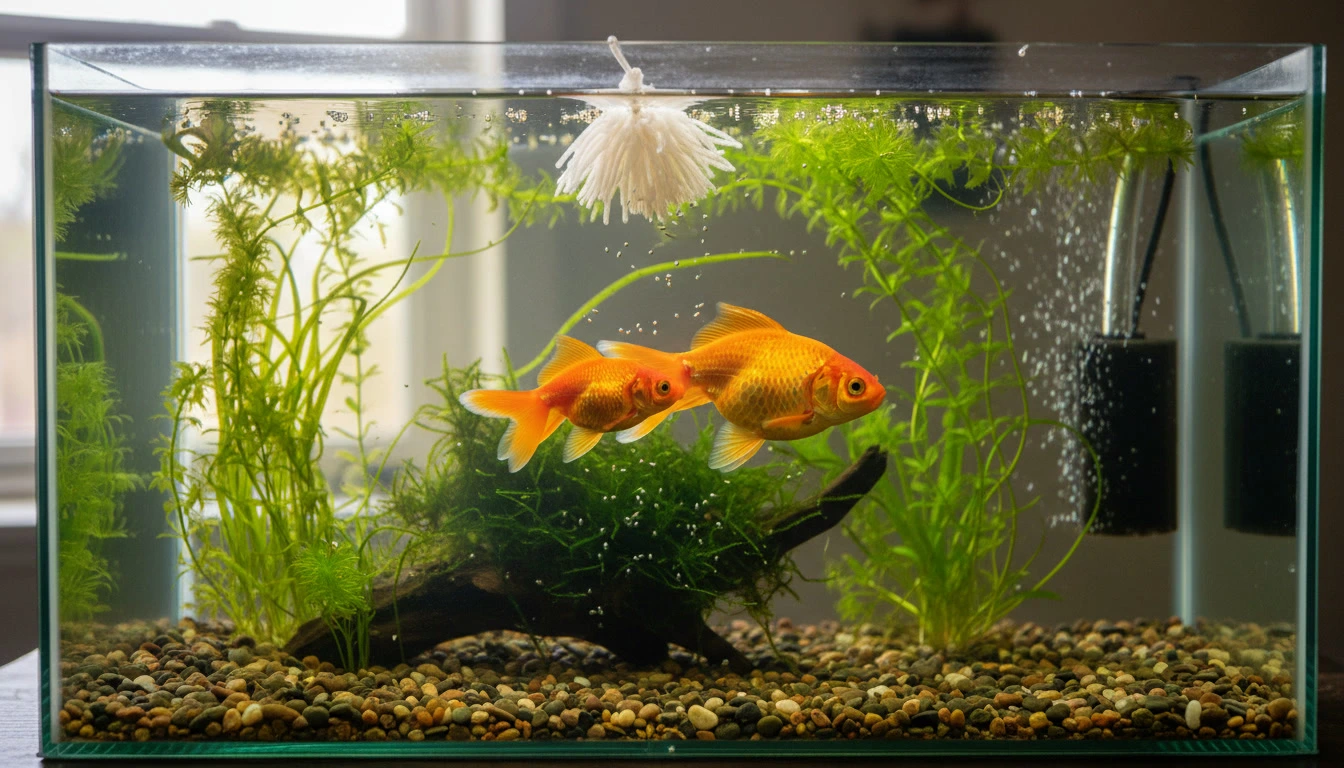
I remember watching my goldfish chase each other around the tank one spring morning and thinking — wait, are they actually trying to breed? I just stood there, coffee in hand, completely baffled. Half of me was excited. The other half was googling “goldfish breeding” on my phone while simultaneously trying not to spill hot coffee on my keyboard.
That was about six years ago. And honestly? I had no idea what I was doing. Goldfish breeding sounded like something only serious aquarium people did — people with elaborate setups and biology degrees. Not a regular guy with a 30-gallon tank and a bag of frozen bloodworms.
But here’s what I’ve learned after years of trial, error, and way too many trips to the fish store: goldfish breeding for beginners is absolutely doable. You don’t need fancy equipment. You don’t need a science background. You just need the right information — and someone who’s actually been through it to walk you through.
That’s what this guide is. Let’s go.
Can Goldfish Breed at Home? (Let’s Clear the Confusion)
So first — yes. Absolutely yes. Goldfish can and do breed in home aquariums all the time. In fact, I’ve had spawning happen in tanks I wasn’t even trying to breed in. Surprised me completely.
But there’s a lot of confusion out there. YouTube videos make it look either impossibly complicated or weirdly effortless. The truth is somewhere in the middle.
What “goldfish breeding” actually means
When people talk about goldfish breeding, they usually mean getting their fish to spawn — which is the process of the female releasing eggs and the male fertilizing them externally. Goldfish don’t give birth to live young. The eggs sit on plants or a spawning mop, hatch after a couple of days, and tiny fry emerge.
Here’s the myth I want to bust right now: goldfish don’t need expensive setups or special genetics to breed. They’re actually one of the easier fish to breed in captivity, partly because they’re so hardy and partly because they respond well to seasonal temperature changes — which you can simulate at home.
I know, I know — that sounds too simple. But it really is about mimicking what happens naturally in ponds during spring.
What you need before you even start
Before you get into tank setups and spawning mops, there are a few non-negotiables:
- Healthy fish — sick or stressed fish won’t breed. Full stop.
- The right age — goldfish are typically ready to breed at 1–2 years old
- At least one male and one female (more on sexing them later)
- A separate breeding tank — breeding in your display tank is possible, but it gets messy fast
- Basic filtration and a heater — you’ll need control over water temperature
That’s really the starting list. Nothing wild. I started with a second-hand 20-gallon tank I picked up for next to nothing, and it worked fine.
| Item | Purpose | Recommended |
|---|---|---|
| Breeding Tank | Separate spawning space | 20–40 Gallons |
| Sponge Filter | Safe filtration for eggs & fry | Air-powered |
| Heater | Control temperature | Adjustable |
| Spawning Mop / Plants | Egg attachment surface | Java Moss / DIY Mop |
Before we get to the fun part — eggs and fry — let’s build the right environment first.
Setting Up Your Goldfish Breeding Tank
This is where a lot of beginners either overthink things or don’t think enough. I’ve done both. My first breeding attempt had the fish in a way-too-small tank. My second attempt had a setup so elaborate that I stressed the fish out adjusting things every day.
The sweet spot? Keep it simple and intentional.
Tank size and what it means for breeding success
The minimum I’d recommend for goldfish breeding is 20 gallons. But honestly, if you can swing a 30 or 40 gallon, do it. Here’s why: goldfish need space to do their thing. The male chases the female during spawning — sometimes quite aggressively — and a small tank means she has nowhere to go. That stress can actually prevent spawning altogether.
More water volume also means more stable water conditions, which matters a lot when you’re trying to raise delicate eggs and fry.
I use a 30-gallon long tank for breeding. Nothing fancy — a basic glass tank with a tight-fitting lid (goldfish jump more than you’d think).
Water conditions that trigger spawning
This is the part that actually changed everything for me. Goldfish breed in spring in the wild — triggered by rising temperatures after winter. You can simulate this.
Here’s the temperature trick:
- Drop the water temperature gradually to 18–20°C over a week or two
- Then slowly raise it back up to 22–24°C over the following week
- That temperature shift often triggers spawning behavior within days
| Parameter | Ideal Range | Notes |
|---|---|---|
| Temperature | 18°C → 24°C | Gradual increase triggers spawning |
| pH | 7.0 – 7.4 | Keep stable |
| Ammonia | 0 ppm | Critical for survival |
| Water Change | 20–30% | Simulates rainfall effect |
For water parameters, aim for:
- pH: 7.0–7.4
- Ammonia/Nitrite: 0 (non-negotiable — do a water change if needed)
- Filtration: Use a sponge filter or cover your filter intake with a sponge. Eggs and fry get sucked up by standard filters. I’ve lost entire spawns that way. Not fun.
Partial water changes (about 20–30%) also help trigger spawning — again, mimicking spring rains.
Spawning mops and plants — your secret weapons
You need somewhere for the eggs to stick. Goldfish are egg scatterers — they release eggs randomly, and those eggs have a sticky coating that clings to plants and surfaces.
You have two options:
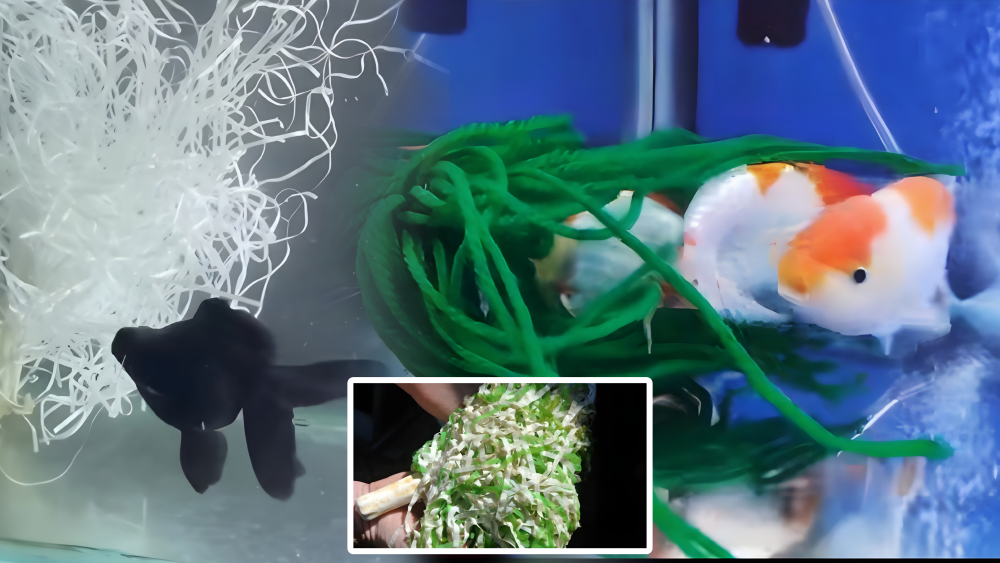
Option 1: DIY Spawning Mop Take green or dark-colored yarn (acrylic works well), cut strands about 25cm long, tie them at the top, and attach a small float. Drop it in the tank. Done. It sounds ridiculous but it works brilliantly.
Option 2: Live Plants
- Java moss — goldfish love spawning in it
- Cabomba — feathery and perfect for egg attachment
- Hornwort — another good choice
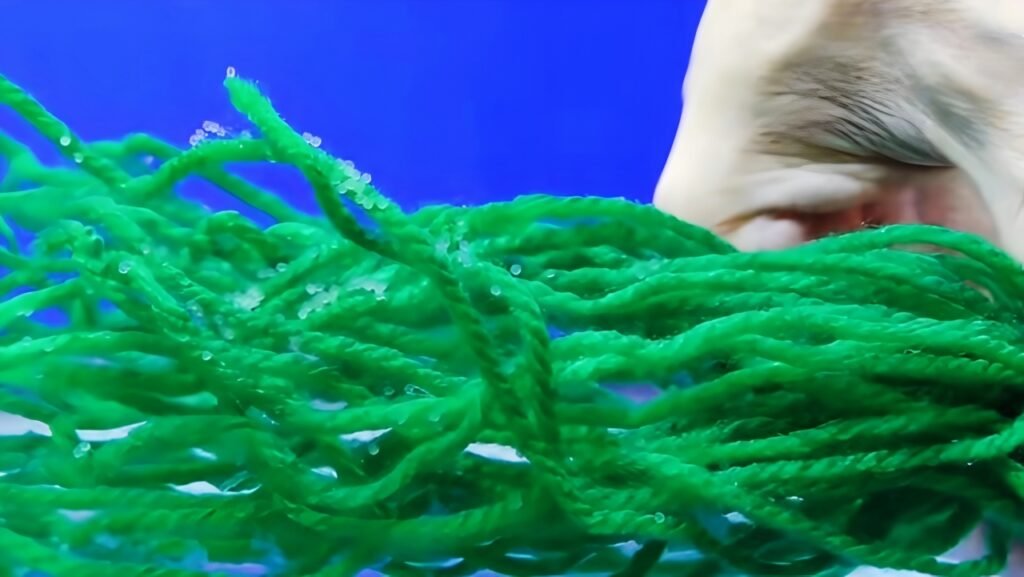
I use a combination — two spawning mops and a clump of java moss. Gives the eggs plenty of places to land.
Great — the tank is ready. Now let’s talk about the real stars of the show: your goldfish.
Choosing and Conditioning Your Breeding Pair
Okay, story time. My very first breeding attempt? I had two fish I was convinced were a male and female. I set up the tank, conditioned them for two weeks, did the temperature trick — and nothing happened. Not a single chase. Not one egg.
Turns out, I had two females.
Don’t be me. Learn to sex your goldfish properly before you go any further.
How to tell males from females
Sexing goldfish can be tricky outside of breeding season, but here are the signs to look for:
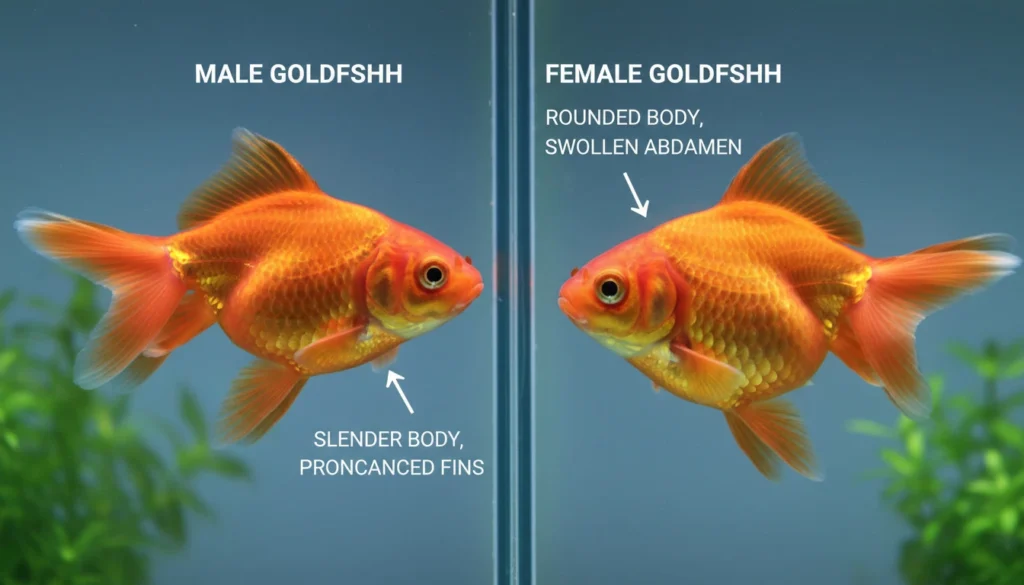
Males:
- Develop small white bumps called breeding tubercles (or breeding stars) on their gill covers and pectoral fins during breeding season — feels like sandpaper
- Usually slimmer body shape
- Vent (the small opening near the tail) is slightly concave or flat
Females:
- Rounder, fuller body — especially noticeable when carrying eggs
- No breeding tubercles
- Vent appears slightly raised or protruding
Honestly, outside of breeding season, sexing can be genuinely difficult. What I’ve found is — get at least three or four fish if you’re not sure, and odds are you’ll have at least one of each.
Conditioning with the right food
This is the step people skip and then wonder why their fish won’t spawn. Conditioning — feeding your fish a high-protein diet for 2 weeks before breeding — is huge.
What to feed:
- Daphnia (live or frozen) — excellent conditioning food
- Brine shrimp (live or frozen) — goldfish go crazy for this
- Bloodworms — use these as a supplement, not a daily staple
- High-quality sinking pellets between live/frozen feeding
Feed 2–3 times a day, only what they can eat in 2–3 minutes. Remove any uneaten food immediately — water quality is everything right now.
Signs your goldfish are ready to spawn
You’ll know. Trust me. The male will start following the female everywhere — nudging her sides, her belly, chasing her around the tank. The female will look noticeably rounder. Sometimes you’ll see her trying to hide behind the spawning mop.
This chasing behavior, as intense as it looks, is completely normal. It’s how the male stimulates the female to release her eggs.
Now comes the moment you’ve been waiting for — spawning. Here’s what it looks like and what to do.
The Spawning Process — What to Expect
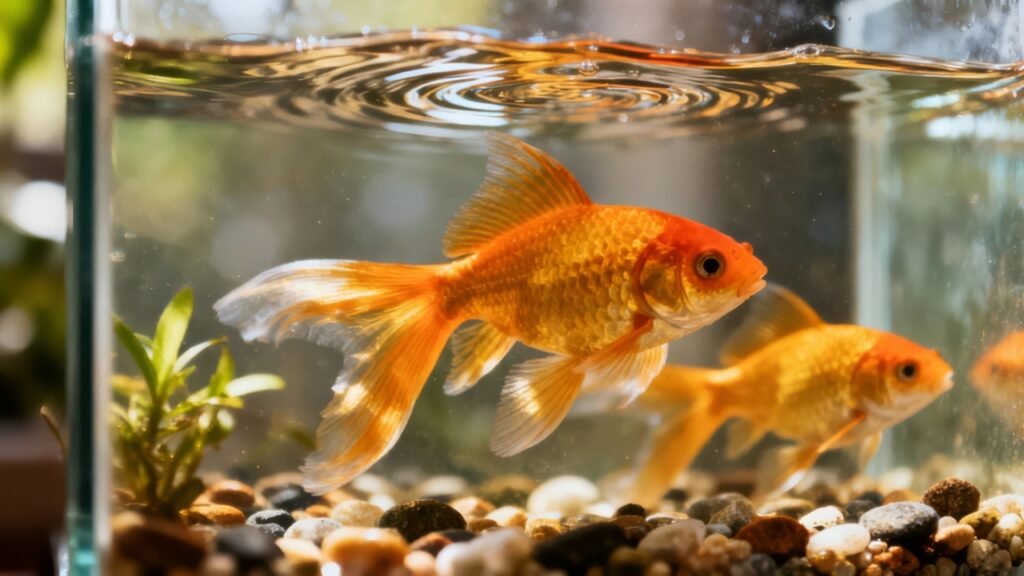
The first time I witnessed a full spawn, I nearly knocked my coffee mug into the tank reaching for my phone to video it. It’s genuinely exciting — and a little chaotic.
Here’s what happens and what you should (and shouldn’t) do.
What spawning looks like (don’t panic!)
Spawning usually happens in the early morning hours — often right around sunrise. I’ve woken up to eggs before even realizing spawning had started.
The male will press himself against the female’s side repeatedly, nudging her toward the plants or spawning mop. She’ll release small, clear eggs — you’ll see them floating and then sticking to the plants. The male immediately swims through them, releasing milt (sperm) to fertilize them.
The whole process can last several hours, sometimes an entire morning.
Fertilized eggs are usually clear to slightly yellowish. Unfertilized eggs will turn white within 24 hours.
One thing that surprised me — the fish look frantic. The male can be quite aggressive. If the female is being seriously harassed and there’s no break, you can temporarily separate them with a tank divider for an hour. But mostly, let them do their thing.
Should you remove the parents after spawning?
Yes. Remove them immediately once spawning is complete.
I cannot stress this enough. Goldfish have zero parental instinct. They will eat their own eggs — and they do it fast. The same fish that just laid hundreds of eggs will turn around and start snacking on them within minutes.
What I do: once I notice spawning has slowed down and the female looks slimmer (a sign she’s released most of her eggs), I move both parents back to the display tank.
The breeding tank then becomes the egg nursery.
How many eggs to expect
It varies a lot. A smaller, younger female might drop 100–200 eggs. A large, healthy female in prime condition can release up to 1,000 eggs in a single spawn.
Don’t get too attached to those numbers. Not all eggs will be fertilized. Not all fertilized eggs will hatch. And not all hatched fry will survive. This is just the reality of fish breeding — and once you accept it, the whole process becomes less stressful.
You’ve got eggs. Amazing. But the work isn’t over — now we need to protect those eggs until they hatch.
Hatching Eggs and Raising Baby Goldfish (Fry)
This is the section I wish someone had handed me on day one. Raising fry is where most beginners — myself included — make the most mistakes.
The eggs have been laid, the parents are gone, and now you’re essentially running a tiny fish nursery.
How long do goldfish eggs take to hatch?
At around 22–24°C, goldfish eggs typically hatch in 48 to 72 hours. At lower temperatures, it can take 4–5 days. This is another reason water temperature matters — too cold, and the eggs develop slowly and are more vulnerable to fungal infection.
Check your eggs daily. Clear or slightly golden eggs = healthy. White or fuzzy eggs = unfertilized or infected.
Remove white/cloudy eggs as soon as you spot them. I use a turkey baster for this — it’s gentle enough not to disturb the healthy eggs, and you can suck out the bad ones precisely. Leaving fungal eggs in the tank can spread the infection to healthy ones.
Some breeders add a few drops of methylene blue to the water — it’s an antifungal that helps protect eggs. I’ve used it and found it helpful, especially in warmer water where fungal growth is faster.
First food for goldfish fry
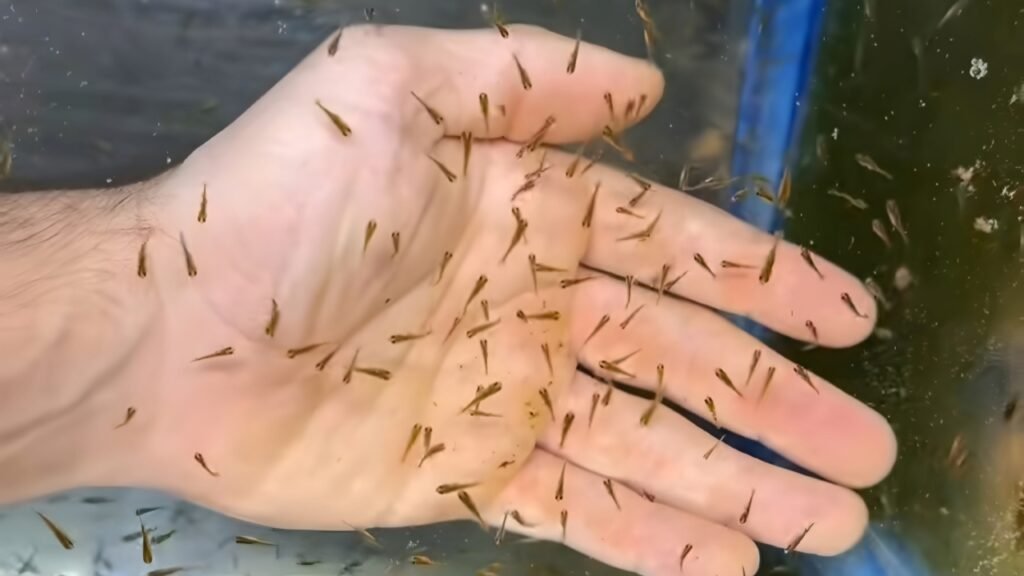
Right after hatching, fry will attach themselves to the sides of the tank and the spawning mop. They’re absorbing their yolk sac — don’t feed them yet. This lasts about 2–3 days.
Once they’re free-swimming (you’ll see them darting around the tank), it’s feeding time.
Week 1–2 foods:
- Infusoria — microscopic organisms, ideal first food. You can culture your own with a jar of water and some lettuce.
- Egg yolk paste — hard-boil an egg, take a tiny bit of the yolk, mix with tank water, and drop it in with a syringe. Do this sparingly — it clouds the water fast.
- Commercial liquid fry food — easier and less messy than egg yolk
Week 2 onwards:
- Baby brine shrimp (nauplii) — fry go absolutely wild for these
- Micro worms
- Finely crushed flake food
| Stage | Food Type | Frequency |
|---|---|---|
| Day 1–3 | No feeding (yolk sac stage) | – |
| Week 1–2 | Infusoria / Liquid food | 3–4 times daily |
| Week 2+ | Baby brine shrimp | 2–3 times daily |
| Week 4+ | Crushed flakes | 2 times daily |
Feed small amounts 3–4 times a day. Remove uneaten food religiously.
Common mistakes that kill fry
I’ve made most of these. Learn from me:
- Using a power filter — fry get sucked in. Use a sponge filter only.
- Overfeeding — leftover food rots, ammonia spikes, fry die. Feed less than you think you need to.
- Doing large water changes — the temperature and chemistry shock can kill fry. Do small, frequent changes (10–15%) with water that’s matched in temperature.
- Overcrowding — if you have 200+ fry in a 20-gallon, they’ll quickly outcompete each other. Consider splitting them across tanks as they grow.
- Giving up too early — fry look transparent and tiny for the first few weeks. They’re alive even when you can barely see them.
Once your fry are swimming freely, you’re officially a goldfish breeder. Let’s talk about what to do when things go wrong.
Common Goldfish Breeding Problems (And Fixes)
Not every attempt goes smoothly. I’ve had spawns fail, fry batches crash, and fish that simply refused to cooperate despite perfect conditions. Here are the most common problems and what I’ve found actually helps.
Goldfish not spawning — what’s wrong?
This is the most common frustration. You’ve set everything up, you’ve conditioned the fish, you’ve done the temperature trick — and nothing.
A few things to check:
- Wrong sex ratio — try 2 males to 1 female. The competition between males can actually stimulate spawning.
- Wrong season — goldfish are strongly influenced by photoperiod (light cycles). In winter months, even with temperature manipulation, some fish resist spawning. Spring and early summer are the most reliable times.
- Stress factors — loud environments, people tapping the glass, fluctuating water conditions. Move the tank somewhere quiet.
- Fish too young or too old — prime breeding age is 2–5 years. Very young or very old fish breed less reliably.
- Not enough water changes — do a larger-than-usual water change (30–40%) with slightly cooler water. This often kickstarts things.
Eggs not hatching or turning fuzzy
White, fuzzy eggs are typically either unfertilized or infected with fungus — usually Saprolegnia.
What to do:
- Remove affected eggs immediately with a turkey baster
- Add methylene blue to the water (follow dosage on the bottle — usually a few drops per gallon)
- Increase aeration slightly — fungus thrives in low-oxygen water
- Check that your male is actually healthy and producing viable sperm
If most of your eggs are turning white, it could be a fertilization issue. Try conditioning the male more aggressively with live food, or consider introducing a second male.
You’re now equipped to handle whatever your goldfish throw at you. Let’s wrap up with a few quick answers to the questions I get most often.
Frequently Asked Questions About Goldfish Breeding
How long does it take to breed goldfish from start to finish? If you count conditioning time (about 2 weeks), plus the spawning event, hatching (2–3 days), and growing fry to a recognizable size — you’re looking at roughly 6–8 weeks before the fry resemble tiny goldfish. Their colour doesn’t come in until they’re a few months old, which is always a lovely surprise.
Can I breed goldfish in my regular display tank? Technically yes, but I’d advise against it. The other fish will eat the eggs immediately, and it’s nearly impossible to rescue fry from a community setup. A separate breeding tank gives you so much more control.
Do I need a male and female, or can I have more fish? You need at least one male and one female. A good ratio for beginners is two males to one female — the competition encourages more active spawning behavior. Just make sure your female has enough space to retreat if needed.
Why are my goldfish eggs turning white? White eggs are usually unfertilized or infected with fungus. Remove them immediately. If the majority are turning white, the fertilization may have been poor — work on conditioning your male with live food and try again next spawn.
How many goldfish fry will actually survive? Honestly? It varies wildly. Without intervention, survival rates can be as low as 10%. With proper feeding, water maintenance, and a sponge filter, you can get that much higher — sometimes 50–70% of hatched fry make it to juvenile size. Don’t be discouraged by losses. It’s part of the process.
Final Thoughts
Six years ago, I nearly gave up after my first failed spawn attempt — the one with two females I thought were a pair. I’m really glad I didn’t.
Goldfish breeding has become one of my favourite parts of this hobby. There’s something genuinely magical about watching tiny, barely-visible fry turn into recognizable little goldfish over the course of a few months. The first time a batch of my fry developed their orange and white colouring — I honestly called my friend just to tell him about it. He did not share my enthusiasm. His loss.
If there’s one thing I want you to take away from this guide, it’s this: start simple. Don’t wait until you have the perfect setup. Get a second-hand tank, learn to sex your fish properly, condition them well, and do the temperature trick. You might surprise yourself with how quickly things happen.
And when things go wrong — and they will, at some point — just adjust and try again. Every failed spawn taught me something. Every successful hatch felt like a small victory.
You’ve got this. Good luck with your first spawn.
If you found this guide helpful, drop a comment below and let me know where you’re starting from — first-time fish keeper, or returning to the hobby? I read every single one.

KD Sivanath is an aquarium enthusiast with over 7 years of experience in fish keeping and breeding. He specializes in helping beginners learn simple and effective methods for breeding popular aquarium fish. Through this blog, he shares practical tips, real-life experience, and easy-to-follow guides to help anyone start and succeed in fish breeding.