
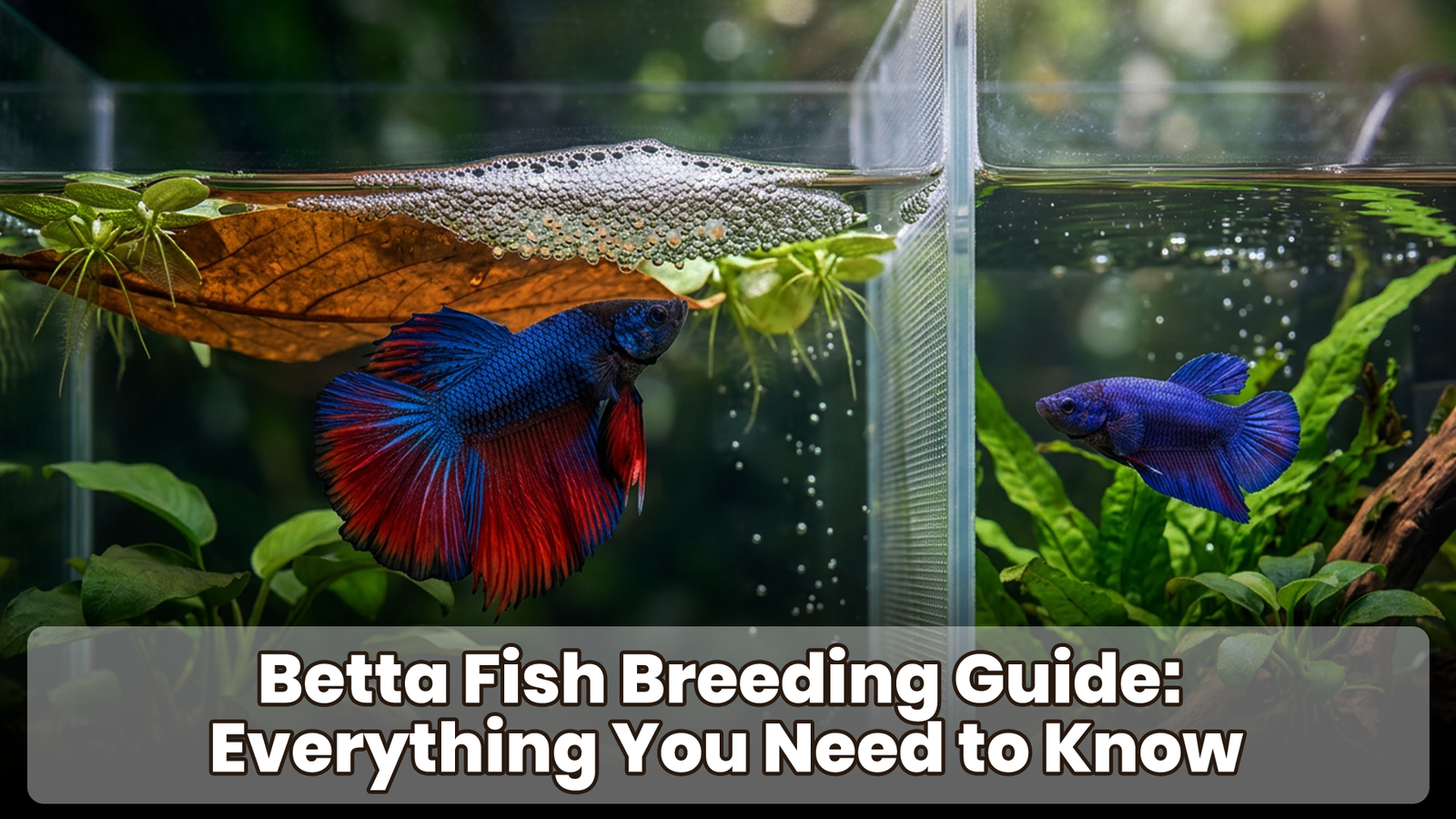
I lost every single egg from my first betta spawn within six hours. Every last one.
I still remember standing over that little ten-gallon tank at almost midnight, watching my male — a copper halfmoon I’d named Rusty, mostly because he looked like an old penny — tear his own bubble nest apart and swallow the eggs he was supposed to be guarding. I had no clue what had gone wrong. I’d skimmed a couple of forum threads, watched one YouTube video twice, and figured that was enough prep. It wasn’t. Not even close.
If you’re reading this because you’re nervous about your first spawn, or because you’ve already had one collapse the way mine did, I get it completely. That mix of excitement and dread right before you introduce a pair — wondering if you’re about to witness something incredible or spend the next hour scooping out shredded fins — is exhausting. I know exactly how frustrating it is when every website gives slightly different numbers and none of them mention the weird stuff that actually happens once real fish are involved.
Seven-plus years and, honestly, more spawns than I’ve bothered counting later, here’s the betta fish breeding guide I wish someone had handed me before that disastrous first attempt.
Understanding Betta Fish Breeding Basics
Betta breeding isn’t like tossing two community fish into a tank and hoping nature sorts it out. Siamese fighting fish breeding comes with a built-in complication baked into the name itself — the same territorial aggression that makes males so famous is exactly what you’re managing at every single stage.
What Makes Betta Breeding Different From Other Fish
Most egg-laying fish tolerate each other fine during spawning season. Bettas mostly don’t. Males stake out territory instinctively, and females aren’t always thrilled about sharing space either, so the whole process becomes an exercise in careful, staged introductions rather than “add water and wait.” Get the sequence wrong and you’re looking at torn fins at best — a dead female at worst. I don’t say that to scare you off. I say it because I wish someone had said it to me plainly instead of glossing over it.
Male vs Female Betta: Physical and Behavioral Differences
Males carry the long, flowing fins most people picture the second someone says “betta.” Females are shorter-finned, rounder through the belly, and — this is the detail beginners miss constantly — develop a small white nub near the ventral area called the ovipositor, or egg spot, once they’re ready to breed. A conditioned, interested male builds a bubble nest without needing a female present at all; it’s just part of normal, healthy behavior. A receptive female, meanwhile, typically shows vertical breeding bars down her sides rather than the horizontal “stress stripes” that mean the opposite.
Is Your Betta Pair Ready to Breed?
Here’s a mistake I made early on and still see beginners make constantly: assuming any female with faint vertical lines is ready to go. She isn’t necessarily. I introduced a female too soon once, and the male — confused by her total lack of interest — went after her fins instead of courting her. What I’ve found after doing this dozens of times is that a genuinely ready female will flare back at the male through the divider glass, hover near his nest with visible interest, and generally seem more curious than terrified. If she’s hiding constantly or flashing horizontal fear stripes, she’s telling you to wait. Listen to her.
Once you can read these signals with some confidence, the real project — building their breeding home — begins.
Betta Breeding Tank Setup
Tank Size, Water Depth, and Equipment Checklist
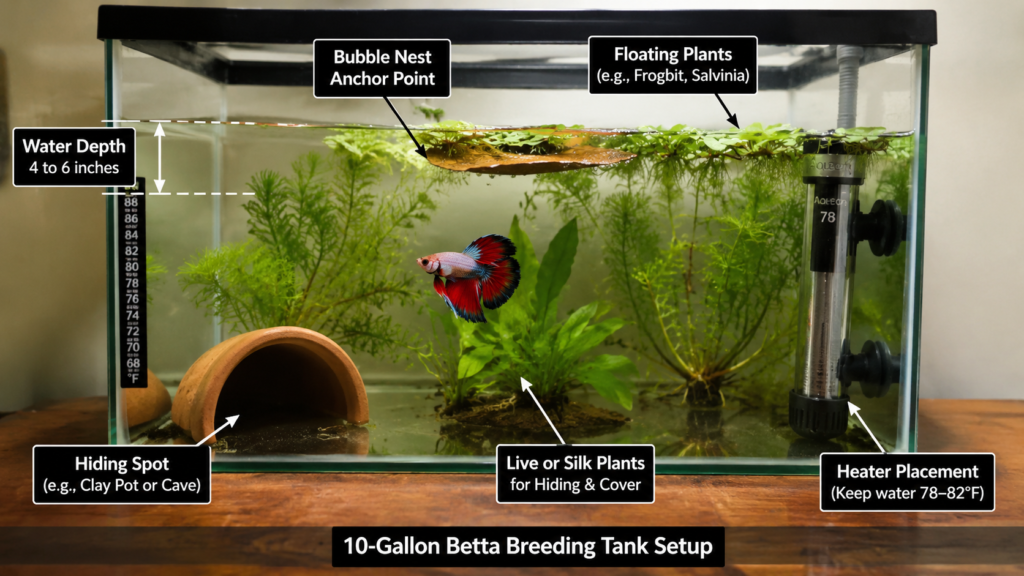
I’ve settled on a 10-gallon tank as my go-to for most spawns — roomy enough to give a stressed female somewhere to retreat, small enough that fry-rearing later doesn’t turn into a part-time job. Water depth should stay shallow, somewhere around 4 to 6 inches, since newly hatched fry are weak swimmers and deeper water just makes the trip to the surface for air that much harder on them. You’ll also want a reliable heater (temperature stability matters more than the exact number, in my experience), a sponge filter running on the gentlest setting or switched off entirely during active spawning, and absolutely no substrate. A bare bottom means eggs are visible and retrievable instead of vanishing into gravel.
Adding Plants, Hiding Spots, and a Bubble Nest Base
I always float something broad-leafed near the surface — an Indian almond leaf works well, and so does a small square of foam. The male anchors his nest to it, and it doubles as cover the female can duck under if things get tense. I’ll usually toss in a couple of hiding spots too, a cluster of silk or live plants, sometimes a small clay pot turned on its side, just so she has an actual escape route rather than nowhere to go.
Introducing the Pair Safely (Divider Method)
This is the part I completely botched the first time around. I put both fish together immediately, assuming they’d “figure it out.” They did not figure it out. These days I always use a clear divider — an acrylic pane or even just a specimen container the female sits inside — and let them observe each other for 3 to 5 days before anything else happens. You’re watching for two things: a male actively building and maintaining his nest, and a female flaring back playfully rather than cowering in a corner. If either sign is missing after several days, it’s often smarter to swap in a different pairing than force it — breeders who keep backup fish on hand tend to have far less heartbreak than the ones who don’t.
With the tank sorted, the next step is dialing in water conditions — and this, more than anything else, is where most beginners quietly sabotage themselves.
Betta Fish Breeding Conditions & Water Parameters
Honestly? This is the section I get the most questions about, and it’s also the one people skim past because it “seems boring.” Please don’t skim it. Fry are dramatically less forgiving of sloppy water than adult bettas are.
Ideal Temperature and pH for Spawning
| Parameter | Ideal Range | Notes |
|---|---|---|
| Temperature | 78–82°F (25.5–28°C) | Warmer end tends to encourage nest-building and spawning activity |
| pH | 6.5–7.2 | Slightly acidic to near-neutral; avoid sudden swings more than the exact number |
| Water Hardness | Soft to moderate | Bettas in the wild come from soft, slow-moving water |
| Ammonia / Nitrite | 0 ppm | Non-negotiable — fry have almost no tolerance for either |
Worth mentioning: research into wild Betta splendens populations has actually found them living in water quite a bit softer and more acidic than most beginner care guides suggest, sometimes down toward pH 5.5 in native rice paddies and slow streams. That doesn’t mean you need to chase extreme numbers in your own tank — stability matters far more than precision here — but it explains why bettas generally tolerate a soft, slightly acidic breeding tank so comfortably.
Water Hardness and Conditioning Tips
Since bettas evolved in shallow, vegetation-dense, slow-moving water across Thailand, Cambodia, Vietnam, and Laos, I’ve found spawning success improves noticeably when I lean toward softer water rather than anything close to liquid rock. If your tap water runs hard, a splash of RO water blended in can make a real difference without needing anything fancy.
Conditioning the Pair Before Breeding (Diet & Timing)
For roughly two weeks before I even think about introducing a pair, both fish go on a live-or-frozen food rotation — bloodworms, brine shrimp, daphnia — fed in small portions two to three times daily. The difference this makes is honestly kind of dramatic. Conditioned fish spawn faster, produce noticeably larger clutches, and the whole process just feels calmer and less chaotic than the times I’ve rushed it.
Once your water’s stable and your fish are properly conditioned, it’s time for the moment every breeder is actually waiting for — spawning itself.
Betta Spawning Guide — Step by Step
The Courtship Dance and Embrace
Once the divider comes out, the male typically chases the female toward his nest. It looks aggressive — and honestly, it kind of is — but there’s a rhythm to it that becomes obvious once you’ve watched it a few times. Eventually he wraps his body around hers directly beneath the nest in what breeders call the “embrace,” squeezing gently until she releases her eggs.
How Eggs Are Fertilized and Collected in the Bubble Nest
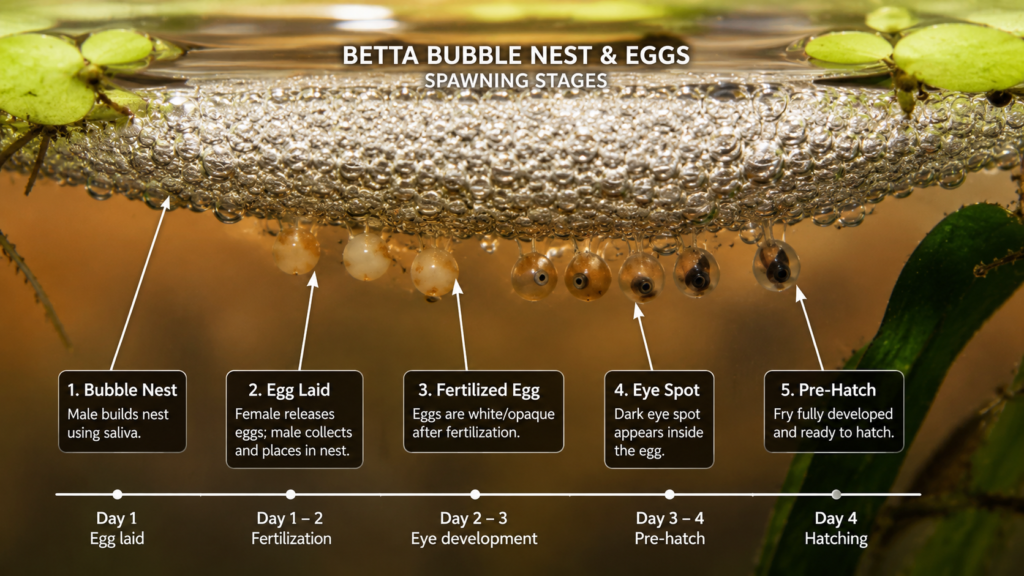
As the eggs fall, the male fertilizes them in the water column and then catches them in his mouth, one by one, spitting each up into the bubble nest. A single spawn can produce anywhere from roughly 30 up to 500-plus eggs, depending heavily on the female’s age, size, and how well she was conditioned beforehand — and yes, that range still catches me off guard sometimes, even after all these years. This embrace-and-collect cycle usually repeats for one to three hours, sometimes longer.
Removing the Female After Spawning
Timing here really matters. Once she stops producing eggs and starts hiding in a corner instead of engaging with the nest, it’s time to net her out — gently, and without hesitation. Leave her in too long and the male’s focus shifts hard from courtship to nest defense, and she often becomes the target once he considers his job done.
With the eggs safely tucked away, the father takes over — though your job as the breeder is far from finished.
Betta Fish Eggs and Male Care Duties
How Long Betta Eggs Take to Hatch
Eggs generally hatch within 24 to 36 hours at a stable 80°F, though I’ve seen it stretch closer to 48 hours in slightly cooler water, and some sources note it can occasionally run a bit longer depending on the exact temperature and the individual clutch.
What the Male Does (and When to Remove Him)
The male spends this window fanning oxygen-rich water over the nest and catching any eggs that drop, spitting them back up without fail. He stays genuinely useful right up until the fry become free-swimming, usually 2 to 3 days after hatching. That’s your cue to remove him — his instincts flip from protector to opportunist almost overnight once the fry are mobile, and a male who was a devoted father an hour ago can start picking off his own offspring without much warning.
Common Problems: Fungus, Eaten Eggs, Nest Collapse
I lost close to half a clutch to fungus once, years back, before I understood why the eggs were turning white and fuzzy overnight instead of developing normally. What actually changed things for me was dosing a small, careful amount of methylene blue into the water and cutting filter flow back further than I thought I needed to — turns out even a mild current was disturbing the nest more than I’d realized. Fungus spreads fast once it takes hold, so catching it in the first day matters more than almost anything else at this stage. I’d also add: don’t panic if the male eats a few unfertilized or damaged eggs along the way. That’s normal nest maintenance, not a failure on your part.
Once the fry go free-swimming, breeding shifts into its most delicate — and honestly most nerve-wracking — phase: keeping them alive.
Betta Fry Care and Feeding
First 3 Days: Yolk Sac Stage (No Feeding Needed)
Newly hatched fry live off their attached yolk sac for roughly the first 2 to 3 days. Resist the urge to feed them during this window — the water quality risk from uneaten food isn’t worth it, and they genuinely don’t need anything yet.
Betta Fry Feeding Schedule (Infusoria to Baby Brine Shrimp)
| Fry Age | Food Type | Frequency |
|---|---|---|
| Day 3–7 | Infusoria or vinegar eels | 3–4 times daily |
| Week 2–3 | Newly hatched baby brine shrimp | 3–4 times daily |
| Week 4 onward | Crushed flake, microworms | 2–3 times daily |
The first time I tried hatching my own baby brine shrimp eggs, I somehow got the salinity wrong and ended up with maybe a 10% hatch rate — a whole afternoon’s effort for what amounted to a handful of usable nauplii. Frustrating barely covers it. Once I got the salt concentration and temperature properly dialed in, hatch rates jumped to somewhere around 80% or better, and feeding stopped feeling like a guessing game every single day.
Water Changes and Growth Milestones (Jarring Time)
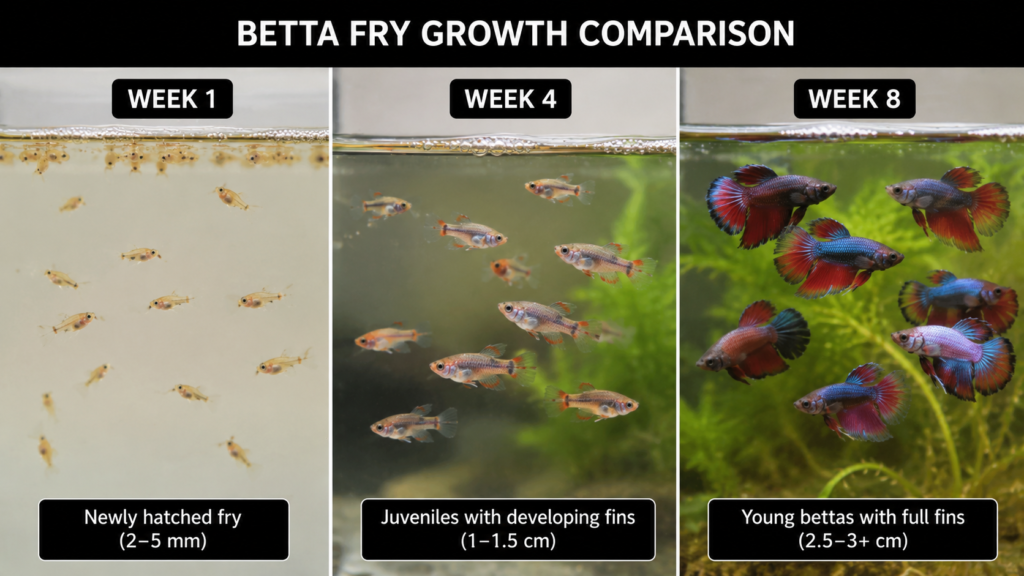
Small, frequent water changes — daily, in tiny amounts, siphoned out gently with a turkey baster — keep ammonia in check without stressing fry that are still developing. By roughly 6 to 8 weeks, most fry are large enough to start jarring individually, particularly the males, who’ll begin flaring and nipping at each other well before that if left grouped together too long.
Feeding is half the battle — the other half is avoiding the mistakes that quietly wipe out entire spawns without much warning.
Betta Breeding Tips for Beginners (Mistakes to Avoid)
Rushing the Introduction or Skipping Conditioning
If I could go back and tell my younger self one thing, it’d be this: slow down. Every real disaster I’ve had traces back to a step I knew I was rushing at the time and did anyway.
Overcrowding Fry Tanks
More fry crammed into less space means more waste, faster ammonia buildup, and stunted growth for the weaker ones. Thin the group out gradually as they grow instead of letting a hundred-plus fry pile into one container long-term.
Ignoring Water Quality During Fry Stage
Fry are far less forgiving of ammonia spikes than adult bettas — a single “small” lapse in water changes has wiped out dozens of fry for me overnight before. It’s a rough lesson, and one I only needed to learn the hard way once.
A Few More Things I’ve Learned the Hard Way
Not labeling or dating spawns is a mistake I still catch myself making occasionally, especially when running more than one tank at once — it gets confusing fast. I’d also gently push back on the idea that you need expensive equipment to succeed here; some of my best spawns came out of a plain foam box setup with nothing more than a heater and a thermometer. And if a pair simply won’t spawn after a few days despite good conditioning, it’s usually not “almost there” — it’s often just an incompatible pairing, and swapping one fish out tends to solve it faster than waiting it out.
Frequently Asked Questions
How long does it take for betta fish to breed?
Courtship to spawning usually takes anywhere from a few hours to about two days after introduction, depending on how ready both fish genuinely are — rushing this rarely speeds it up.
How many eggs do betta fish lay?
Typically somewhere between 30 and 500-plus eggs per spawn, with the exact number depending largely on the female’s age, size, and how well she was conditioned beforehand.
Can I breed bettas without a divider tank?
I wouldn’t recommend it, especially for beginners. Without a divider, you’re relying entirely on timing and luck, and aggression can escalate into serious injury far faster than most people expect.
Why did my male betta eat the eggs?
Usually it comes down to stress, poor conditioning, a disturbed nest, or simply an inexperienced first-time father — filter flow and sudden tank movement are common, often overlooked culprits.
When can I feed betta fry baby brine shrimp?
Around day 3 to 4, once they’re free-swimming and their yolk sac has been fully absorbed — feeding earlier than that usually just fouls the water for no benefit.
How long do betta eggs take to hatch, and what if they don’t?
Most hatch within 24 to 36 hours at a stable 80°F. If a noticeable chunk hasn’t hatched by 48 hours, they were likely unfertilized or damaged, and the male will typically clear them out on his own.
Do you need a special license or permit to breed bettas at home?
For personal, small-scale hobby breeding, no — most home breeders don’t need any formal permit. That said, if you plan to sell fry commercially, it’s worth checking your local regulations, since rules vary quite a bit by region.
Can two bettas from the same batch be bred together?
Technically yes, but it’s not something I’d recommend. Breeding closely related bettas increases the odds of genetic weaknesses showing up in later generations, so keeping unrelated breeding stock is worth the extra effort.
Final Thoughts
Looking back at that first failed spawn with Rusty, I almost feel bad for how unprepared I actually was. But that failure taught me more than any single successful spawn ever could — it’s genuinely what pushed me to understand what these fish need instead of just following steps blindly off a forum post.
Watching a bubble nest full of eggs hatch into a cloud of tiny, wriggling fry for the first time is one of those moments that makes every failed attempt worth it in hindsight. It’s messy, occasionally heartbreaking, and it will absolutely test your patience — but it’s also one of the most genuinely rewarding things you can experience as a hobbyist. If you’ve read through our broader betta fish care guide or looked into the aquarium nitrogen cycle before starting this project, you’re already ahead of where I was on day one.
If there’s one thing I want you to walk away with, it’s this: don’t rush the process, and don’t be too hard on yourself when something goes sideways. It happens to every breeder, myself included, more times than I’d like to admit. Learn from it, adjust, and try again — you’ll get there.
I’d genuinely love to hear how your first spawn goes. Drop a comment and let me know what happened.

KD Sivanath is an aquarium enthusiast with over 7 years of experience in fish keeping and breeding. He specializes in helping beginners learn simple and effective methods for breeding popular aquarium fish. Through this blog, he shares practical tips, real-life experience, and easy-to-follow guides to help anyone start and succeed in fish breeding.