
Choosing the right food is one of the first real decisions every aquarium owner has to make — and it’s easy to get wrong. Live food refers to living organisms such as brine shrimp, daphnia, bloodworms, and blackworms that fish hunt and eat naturally. Dry food, on the other hand, includes flakes, pellets, and freeze-dried products that are manufactured to provide a stable, balanced diet with a long shelf life.
Many beginner fish keepers assume that any food from the pet store aisle will do the job equally well. In reality, food choice plays a direct role in growth rate, immune strength, coloration, and breeding success. Fish fed an unbalanced or low-quality diet often show slower growth, duller colors, and weaker resistance to common illnesses — problems that are usually preventable with the right feeding approach.
This guide breaks down the real differences between live food and dry food for fish, covering the genuine advantages and drawbacks of each, which option tends to work better for breeding, how to build a sustainable daily feeding routine, and a practical recommendation you can apply regardless of your experience level. By the end, you’ll have a clear, evidence-based understanding of how to feed your fish — not just guesswork.
What Are Live Food and Dry Food, Exactly?
Before comparing the two, it helps to understand what each category actually includes and why aquarists have debated this topic for decades.
Live Food: Definition and Common Types
Live food refers to living aquatic or terrestrial organisms fed directly to fish. Common examples include brine shrimp (Artemia), daphnia, bloodworms, blackworms, tubifex worms, and vinegar eels for fry. Because these organisms are alive at the moment of feeding, they closely mimic what fish would encounter and hunt in their natural habitat.
Dry Food: Flakes, Pellets, and Freeze-Dried Options
Dry food covers flakes, sinking or floating pellets, granules, and freeze-dried versions of live organisms (such as freeze-dried bloodworms). These products are formulated by manufacturers to deliver a specific, consistent nutrient profile in every batch, and they’re processed to remain stable at room temperature for extended periods.
Why This Comparison Matters for Fish Keepers
The debate exists because both food types genuinely have strengths the other lacks. Live food tends to trigger stronger natural feeding responses and offers a nutrient profile close to a fish’s wild diet, while dry food offers consistency, safety, and convenience that live food simply can’t match on a daily basis. Understanding both sides — rather than picking one out of habit — is what actually leads to healthier fish.
With the basics covered, let’s look at what live food brings to the table nutritionally.
Live Food Benefits for Fish
Live food remains a preferred choice among many breeders, and there’s a nutritional basis behind that preference.
Higher Protein and Natural Nutrient Density
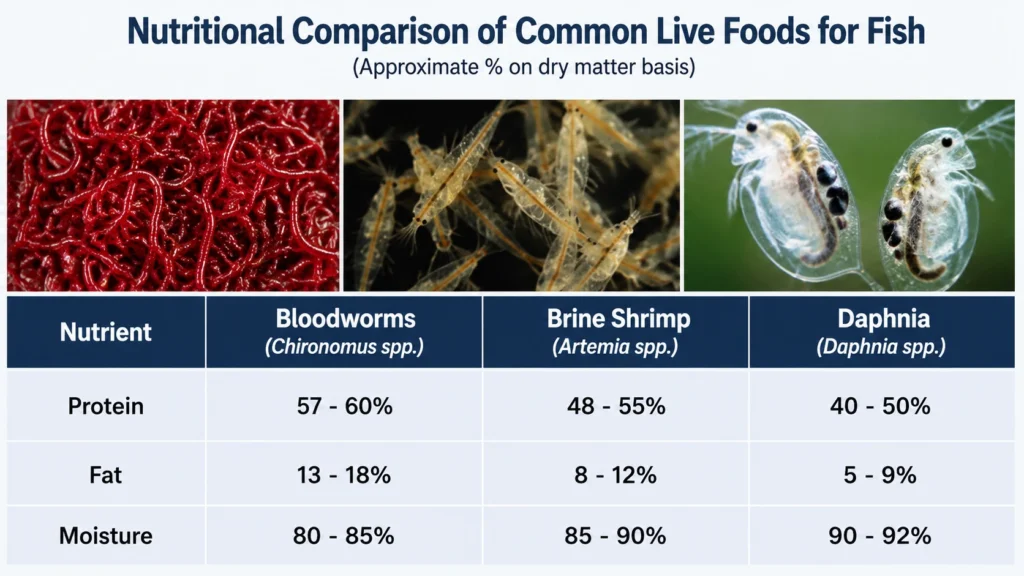
Aquaculture nutrition studies generally place the crude protein content of common live foods like bloodworms and blackworms in the range of 45–60% on a dry matter basis, which is notably higher than most standard dry foods. This protein density, combined with natural moisture content, closely resembles what carnivorous and omnivorous fish species consume in the wild.
Triggers Natural Hunting and Foraging Behavior
Fish are biologically wired to hunt. Live food encourages this instinct, which can reduce stress in shy or newly introduced fish and stimulate feeding in individuals that are reluctant to eat processed food. This behavioral benefit is well documented in general aquaculture and ornamental fish-keeping literature as a factor in improving overall fish activity levels.
Supports Breeding Readiness and Coloration
Live foods rich in carotenoids — such as brine shrimp and daphnia — are commonly recommended by breeders and aquarium associations as part of pre-spawning conditioning diets, since carotenoid intake is linked to improved pigmentation in many ornamental species. Many breeders also report improved spawning frequency and egg output when live food is introduced consistently in the weeks leading up to breeding, though results can vary by species and overall tank conditions.
That said, live food isn’t without drawbacks — and dry food has its own set of genuine advantages worth understanding.
Dry Food Benefits for Fish
For most home aquarium owners, dry food remains the practical backbone of daily feeding — and for good reason.
Convenience and Extended Shelf Life
Unopened, properly stored dry food typically retains nutritional quality for 12 to 18 months, according to most manufacturer guidelines. This makes it far easier to manage for anyone without the time or space to culture live organisms regularly.
Lower Risk of Disease and Parasite Transmission
One of the more understated dry food benefits for fish is safety. Live food sourced from untreated or wild environments can carry parasites and pathogens, whereas commercially manufactured dry food goes through processing steps designed to minimize contamination risk. For beginners especially, this makes dry food a lower-risk starting point.
Cost-Effective for Everyday Feeding
A standard container of quality flakes or pellets is generally more affordable per feeding than sourcing fresh live food on a regular basis, particularly for larger tanks or multiple aquariums. For hobbyists feeding fish daily without a breeding program to support, this cost difference adds up significantly over time.
Dry food, in short, is formulated to be nutritionally complete on its own — it doesn’t need to be treated as a lesser option, just a different one suited to different needs.
So how do these two options actually compare side by side?
Live Food vs Dry Food: Full Comparison
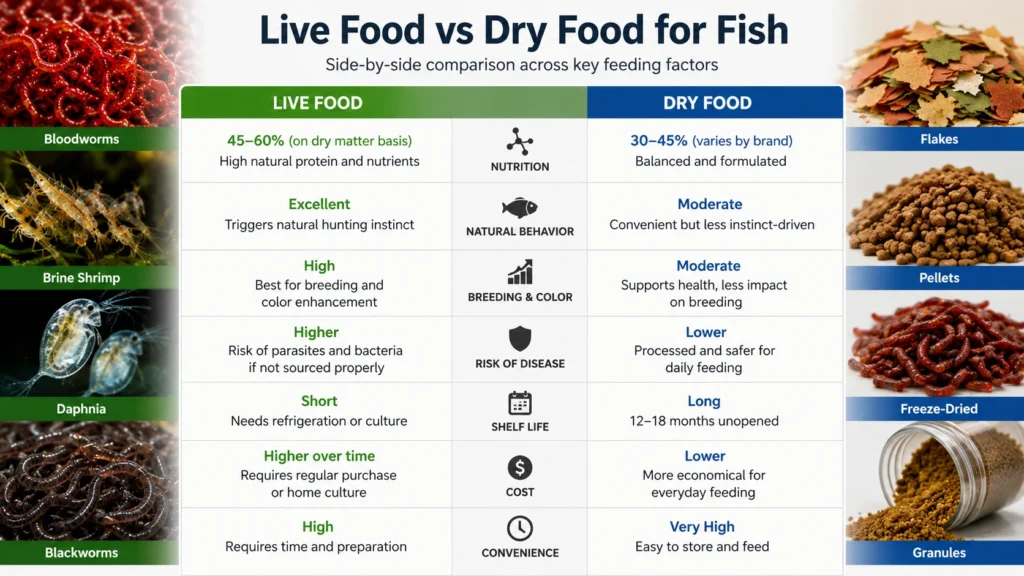
Here’s a direct comparison across the factors that matter most to everyday fish keepers and breeders alike.
| Factor | Live Food | Dry Food |
|---|---|---|
| Protein content | Generally higher (45–60%) | Moderate (30–45%) |
| Shelf life | Very short (must use within days) | Long (12–18 months) |
| Cost per feeding | Typically higher | Typically lower |
| Disease/parasite risk | Higher if unsourced or wild-caught | Lower, due to processing |
| Feeding convenience | Requires sourcing or culturing | Ready to use |
| Impact on breeding | Often stronger conditioning effect | Supportive, but usually milder |
Nutrition: Where Each Option Stands Out
Live food tends to offer higher raw protein and moisture content, while dry food offers formulated consistency — every pellet or flake batch is manufactured to the same nutrient specification, which reduces variability in a fish’s diet.
Cost and Availability Differences
Dry food is widely available, shelf-stable, and predictably priced. Live food availability depends heavily on region, season, and whether local suppliers stock it fresh or frozen.
Health and Safety Considerations
The main risk with live food is contamination from unsourced or wild-caught organisms. The main consideration with dry food is ensuring it’s stored correctly and used before expiration, since older stock can lose some nutritional value over time.
Understanding these differences naturally leads to the next question: how should you actually structure feeding day to day?
Fish Feeding Guide: Combining Both for Best Results
Rather than choosing one food type exclusively, most experienced fish keepers and aquaculture nutrition guidance suggest a combined approach works best for long-term fish health.
A Balanced Base-and-Boost Approach
A commonly recommended structure is using dry food as the daily nutritional base, supplemented with live or frozen food two to three times per week. This balances cost and convenience with the nutritional and behavioral benefits live food provides, without relying on it exclusively.
Feeding Frequency by Fish Type
- Bettas: Pellets daily, live or frozen brine shrimp 2 times weekly
- Guppies: Flakes daily, daphnia 1–2 times weekly
- Cichlids: Pellets daily, blackworms 2–3 times weekly
- Discus: Higher live food proportion, particularly during pre-breeding conditioning
For species-specific feeding schedules and fry-stage nutrition, a dedicated guide like a best food for fish fry resource can offer more detailed guidance than a general overview can cover.
Signs Your Fish May Need Dietary Adjustment
Reduced color intensity, declining spawning activity, or fish repeatedly rejecting food can all indicate a diet that needs rebalancing — whether that means introducing more live food or reviewing dry food quality and freshness.
Getting the balance right is only half the equation — avoiding common feeding mistakes matters just as much.
Common Mistakes to Avoid When Choosing Fish Food
A few recurring mistakes tend to cause more harm than the food type itself.
Overfeeding Live Food
Uneaten live food decomposes quickly and can cause rapid ammonia spikes, harming water quality within hours. Feeding smaller, controlled amounts and monitoring consumption closely helps avoid this.
Using Unwashed or Wild-Caught Live Food
Live food collected from untreated ponds or outdoor sources carries a meaningfully higher risk of introducing parasites or disease, including common issues like ich. Rinsing thoroughly and sourcing from reputable, cultured suppliers reduces this risk considerably. For more on prevention, a resource on common fish diseases is worth reviewing alongside your feeding routine.
Relying on a Single Food Type Long-Term
Feeding only one food type over extended periods can lead to nutritional gaps, even with high-quality dry food. Rotating food sources — including occasional homemade options — supports more complete nutrition over time. If you’re interested in expanding beyond commercial products, a guide on homemade fish food can be a useful next step.
Frequently Asked Questions
Can I feed my fish only live food? It’s possible, but not generally recommended long-term due to nutritional gaps and higher contamination risk compared to a balanced diet that includes dry food.
Is dry food bad for fish? No — quality flakes and pellets are formulated to be nutritionally complete and serve as a reliable daily staple for most species.
How often should live food be fed? Most guidance suggests 2–3 times per week alongside a dry food base, with increased frequency during breeding conditioning for species like discus.
Does live food actually improve fish coloration? Carotenoid-rich live foods, such as brine shrimp and daphnia, are associated with improved pigmentation in many ornamental species, based on general aquaculture nutrition findings.
What’s the safest live food option for beginners? Frozen live food — such as frozen bloodworms or brine shrimp — offers most of the nutritional benefits of fresh live food with a significantly lower contamination risk.
Conclusion
The debate over live food vs dry food for fish doesn’t really have a single winner — and treating it that way misses the point. Live food offers stronger nutritional density and breeding support, while dry food provides consistency, safety, and convenience that make daily feeding manageable for any fish keeper.
For most home aquariums, a combined approach — dry food as the everyday base, live or frozen food added a few times a week — tends to deliver the most balanced results for growth, immunity, and coloration. If breeding is a specific goal, increasing live food intake during conditioning periods can meaningfully support spawning success.
Rather than choosing sides, the more useful question is how to build a feeding routine suited to your fish species, your schedule, and your long-term goals. For further reading, exploring topics like fish breeding guide basics or water parameters for fish breeding can help round out a complete feeding and care strategy.

KD Sivanath is an aquarium enthusiast with over 7 years of experience in fish keeping and breeding. He specializes in helping beginners learn simple and effective methods for breeding popular aquarium fish. Through this blog, he shares practical tips, real-life experience, and easy-to-follow guides to help anyone start and succeed in fish breeding.